
Monk Mode: The Complete Guide to Deep Focus and Extraordinary Achievement
"All of humanity's problems stem from man's inability to sit quietly in a room alone." — Blaise Pascal
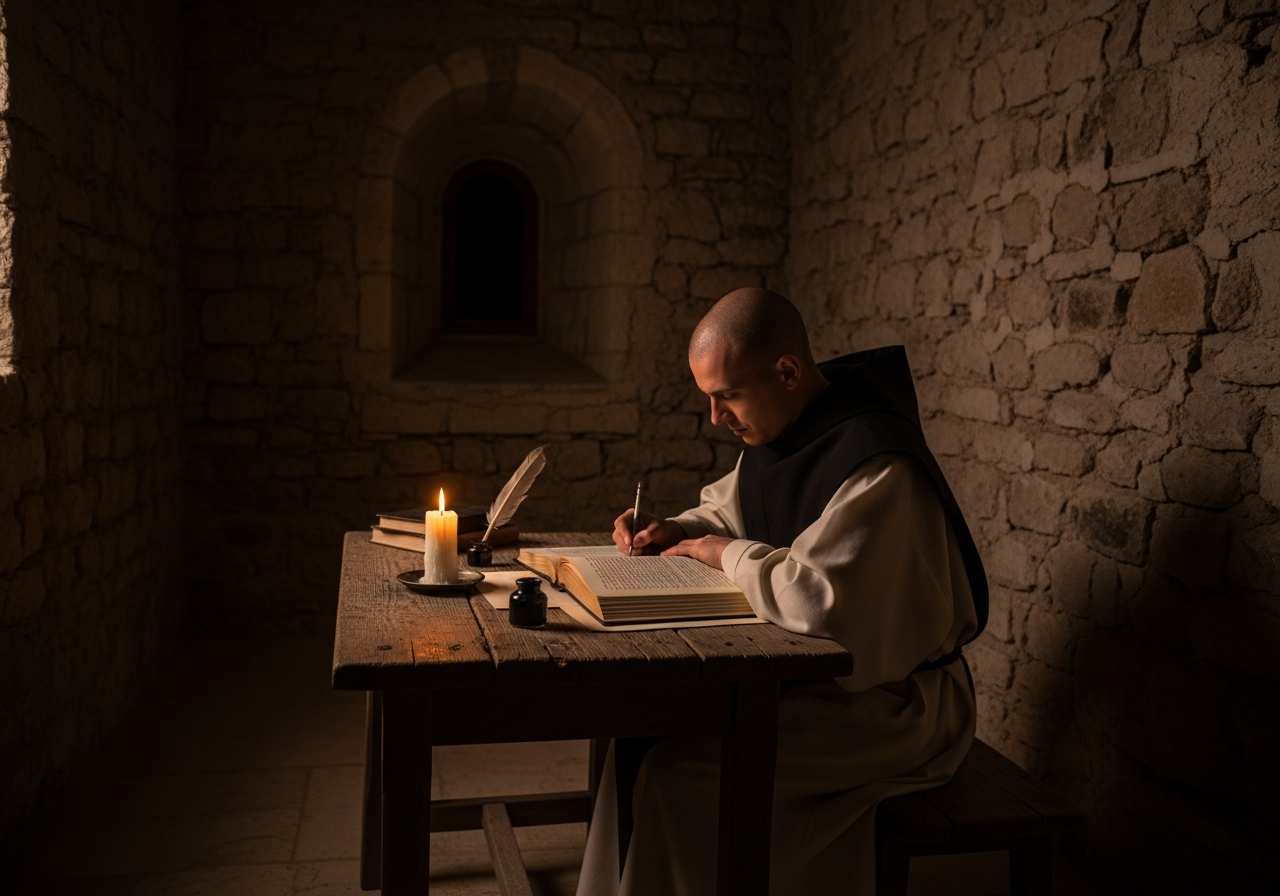
There's a reason monasteries produced some of history's greatest thinkers, writers, and illuminated manuscripts.
It wasn't just quiet. It wasn't just solitude. It was the complete removal of distraction, the channeling of all human energy toward a single purpose, day after day, month after month, year after year.
Monks accomplished extraordinary things because they understood something most of us have forgotten: Focus is a force multiplier. The same person, doing the same work, with undivided attention accomplishes ten times what they would with scattered focus.
In the modern world, we've lost this. Our attention is shattered across a thousand apps, notifications, tasks, and open browser tabs. We're more connected than ever and more distracted than ever. We're busy all the time and accomplished rarely.
Monk Mode is the antidote. It's the practice of temporarily withdrawing from normal life's distractions to focus intensely on a single goal or project. It's not about becoming a monk permanently. It's about borrowing the monk's superpower — focused devotion — and using it to transform your life.
In this comprehensive guide, you're going to learn exactly how to enter Monk Mode, execute it effectively, and emerge on the other side having accomplished what others only dream of.
Part 1: What Is Monk Mode?
The Core Concept
Monk Mode is a period of deliberate isolation and intense focus, typically lasting from one week to several months, during which you eliminate distractions and pour your energy into a specific goal.
During Monk Mode, you:
- Drastically reduce or eliminate social media and entertainment
- Minimize social obligations and optional commitments
- Create large blocks of uninterrupted time for focused work
- Simplify your life to remove unnecessary decisions
- Direct all freed-up energy toward your primary objective
This isn't about becoming antisocial or neglecting responsibilities. It's about temporary, strategic focus — a sprint of intensity that produces breakthrough results.
Why Monk Mode Works
Several factors make Monk Mode extraordinarily effective:
1. The compounding power of focus
When you scatter your attention across many things, you make incremental progress on each. When you focus on one thing, progress compounds dramatically.
Think of it like a magnifying glass concentrating sunlight. Diffused light warms nothing. Concentrated light can start a fire.
2. Momentum
When you work on something every day, intensively, you maintain mental momentum. You keep all the variables in your head. You don't waste time "getting back into it" after long gaps.
3. Identity shift
Extended periods of focused work change who you are. You start to see yourself as someone who can achieve difficult things. This identity shift persists after Monk Mode ends.
4. Elimination of switching costs
Every time you switch tasks, there's a cognitive cost — research suggests up to 23 minutes to fully refocus. Monk Mode minimizes switching, maximizing actual productive time.
Part 2: When to Enter Monk Mode
Monk Mode isn't for everyday — it's for specific seasons and purposes.
Appropriate Goals for Monk Mode
Monk Mode works best for:
Important projects with clear endpoints:
- Writing a book
- Launching a business
- Creating a course or program
- Building a new skill
- Completing a major work project
- Academic achievements
Personal transformation goals:
- Getting in shape
- Breaking an addiction
- Building a meditation practice
- Establishing new habits
Recovery and reset:
- Recovering from burnout
- Resetting after major life changes
- Getting back on track after derailment
Signs You May Need Monk Mode
Consider Monk Mode if you're experiencing:
- Chronic overwhelm and scattered attention
- Important goals that keep getting pushed to "someday"
- A sense that you're busy but not accomplishing what matters
- Feeling stuck in patterns you want to break
- Knowledge that you're capable of more but not accessing it
Duration
Monk Mode periods typically range from:
- Mini Monk Mode (1-2 weeks): Good for a specific short-term push
- Standard Monk Mode (1-3 months): Enough time for significant achievement
- Extended Monk Mode (3-6 months): For major life goals or transformations
Choose based on your goal. Writing a business plan might take 2 weeks of intense focus. Writing a book might take 3 months.
Part 3: Preparing for Monk Mode
Preparation is essential. You can't just wake up one day and enter Monk Mode — you need to set up the conditions for success.
Step 1: Define Your One Thing
Monk Mode demands a single focus. What is the ONE thing you're going to accomplish? Be specific.
"Get healthy" is too vague. "Lose 20 pounds through daily exercise and clean eating" is better. "Write a book" is too vague. "Complete a 60,000-word draft of my novel" is better.
Clarity is power. Know exactly what you're aiming at.
Step 2: Clear the Decks
Before Monk Mode begins, handle everything you can:
- Complete hanging obligations
- Communicate with people who'll be affected by your reduced availability
- Handle administrative tasks
- Stock up on supplies so you won't need to interrupt your focus
You want to enter Monk Mode with nothing pulling at you.
Step 3: Design Your Environment
Set up your physical and digital environment for focus:
Physical:
- Create a dedicated workspace free from clutter and distraction
- Remove or relocate temptations
- Have everything you need within reach
Digital:
- Delete or disable social media apps
- Turn off notifications except essentials
- Install website blockers if needed
- Set up "Do Not Disturb" schedules
Step 4: Create Your Protocol
Develop a daily structure that will guide your Monk Mode. This should include:
- Wake time and morning routine
- Deep work blocks (when and how long)
- Break structure
- Physical movement schedule
- Evening wind-down and sleep time
- Rules for what you will and won't do
Having a protocol means you don't waste willpower deciding each day. You just follow the plan.
Step 5: Communicate
Tell key people what you're doing and why. Set expectations:
- "For the next 8 weeks, I'm in Monk Mode finishing my book. I'll be less available socially. Not an emergency? I'll respond within 24-48 hours."
- "I'm going offline for the month to focus on my business launch. For urgent matters, call or text."
Good people will support you. And you'll have accountability.
Part 4: Executing Monk Mode
You've prepared. Now it's time to execute.
The Daily Rhythm
A typical Monk Mode day might look like:
5:00 AM - Wake and morning routine No phone. Water, movement, meditation, planning.
6:00 AM - 12:00 PM - Deep work block Six hours of focused work on your one thing. No email, no phone, no interruptions.
12:00 PM - 1:00 PM - Break Eat, walk, rest. Still no social media or email.
1:00 PM - 5:00 PM - Deep work block Another four hours of focused work.
5:00 PM - Admin/email block (optional) If you must, 30-60 minutes for essential communication.
6:00 PM - Exercise, dinner, relaxation Movement. Real food. Reading. Time with family if applicable.
9:00 PM - 10:00 PM - Wind down and sleep Prepare for recovery. No screens. Early to bed.
This is aggressive. Adjust for your lifestyle and goals. The key is large, protected blocks for deep work.
Managing Urges and Distractions
During Monk Mode, urges will arise. The compulsion to check social media. The itch to respond to that email. The desire to break focus and do something easier.
How to handle them:
Delay, don't indulge. When the urge comes, tell yourself "I'll check that later" and return to work. Often the urge passes.
Use a capture sheet. Keep a notepad nearby. When thoughts intrude ("I should Google that," "Don't forget to email John"), write them down for later and return to focus. Your mind can relax because it knows the thought is captured.
Protect the first hours. Your morning focus is most vulnerable. Defend it absolutely. No inputs before your deep work block is complete.
Know your triggers. What tends to break your focus? Emails? Specific websites? Boredom? Identify your vulnerabilities and have strategies ready.
The Role of Rest
Monk Mode isn't about grinding 18 hours a day until you collapse. That's unsustainable and counterproductive.
Deep work depletes cognitive resources. You need recovery to replenish them. Most people can do 4-6 hours of truly deep work per day, not 12.
Build in:
- Breaks between focused sessions
- Physical movement
- Time in nature
- Adequate sleep
- One day per week of lighter activity
Your output will be better if you rest properly.
Part 5: Common Challenges and Solutions
Challenge 1: Loss of Motivation
The initial enthusiasm fades. The work gets hard. You wonder if it's worth it.
Solution:
- Reconnect with your "why" daily
- Break the big goal into visible milestones
- Track your progress — seeing accumulation is motivating
- Remember that motivation follows action, not the reverse
Challenge 2: Loneliness
Reduced social contact can feel isolating.
Solution:
- Schedule limited, intentional social time (dinner with a close friend once a week)
- Remember this is temporary
- Connect with others pursuing similar goals (online communities)
- Use solitude for its gifts: self-knowledge, creativity, depth
Challenge 3: Falling Off the Wagon
You planned to stay off social media, but you just spent an hour on Reddit.
Solution:
- Don't spiral into shame. Acknowledge, learn, continue.
- Ask what triggered the slip and address it
- Add more friction to the temptation (delete the app entirely)
- Remember: one slip doesn't end Monk Mode. Two slips becoming a pattern does.
Challenge 4: Neglecting Other Life Areas
You're so focused on your goal that your health, relationships, or basic responsibilities slide.
Solution:
- Build the essentials into your protocol (exercise, key relationship time, hygiene)
- Lean on systems and routines rather than motivation
- Recognize that total neglect is unsustainable
Part 6: Exiting Monk Mode
Monk Mode is a season, not a lifestyle. At some point, you need to return to normal life — ideally having accomplished your goal.
Completing the Mission
Ideally, Monk Mode ends when you've achieved your objective. The book is drafted. The business is launched. The weight is lost. The skill is built.
When you complete your mission, take time to:
- Celebrate the accomplishment
- Document what you learned
- Rest and recover
Transitioning Out
Don't flip a switch from Monk Mode back to your old life. That can lead to overwhelm, backsliding, and lost gains.
Instead:
- Gradually reintroduce elements (social media, social obligations)
- Maintain key habits that served you (morning routine, deep work blocks)
- Be selective about what you invite back into your life
- Integrate lessons into your ongoing lifestyle
Life After Monk Mode
The goal isn't to live in Monk Mode permanently. That's not sustainable for most people.
The goal is to use periodic Monk Mode phases to achieve breakthrough results, build new capabilities, and transform aspects of your life — then return to a more balanced rhythm, carrying your gains with you.
Many successful people operate on a rhythm like:
- 2-3 months of Monk Mode per year
- The rest of the year in a sustainable balance
- Alternating between seasons of intensity and integration
Conclusion: The Power of Disappearing
In a world where everyone is distracted, scattered, and half-present, the person who can focus is a superhero.
They accomplish what others dream of. They build what others talk about. They become what others envy.
Monk Mode is how you access that power. Not through special talent or unusual discipline, but through the strategic removal of everything that isn't essential.
For a season, you disappear. You withdraw from the noise. You give your full attention to what matters most.
And when you emerge, you're different. You've accomplished something real. You've proven to yourself what you're capable of. You've built a foundation that supports everything else.
This isn't for everyone. Most people won't do it. Most people will continue to dabble, to half-commit, to spread themselves impossibly thin.
But you can be different.
Go Monk Mode. Focus. Build something remarkable.
Action Steps: Prepare for Your Monk Mode
Identify your one thing. What goal deserves your complete focus? Define it specifically.
Choose your timeline. When will your Monk Mode start and end? Put it on the calendar.
Create your protocol. Write out your daily structure and rules.
Prepare your environment. Set up your physical and digital space for success.
Communicate. Tell the key people in your life what you're doing and why.
Begin. On the start date, enter Monk Mode. Execute your protocol. Do the work.
The world will keep spinning without you. It will still be there when you return. But you won't be the same person anymore.