
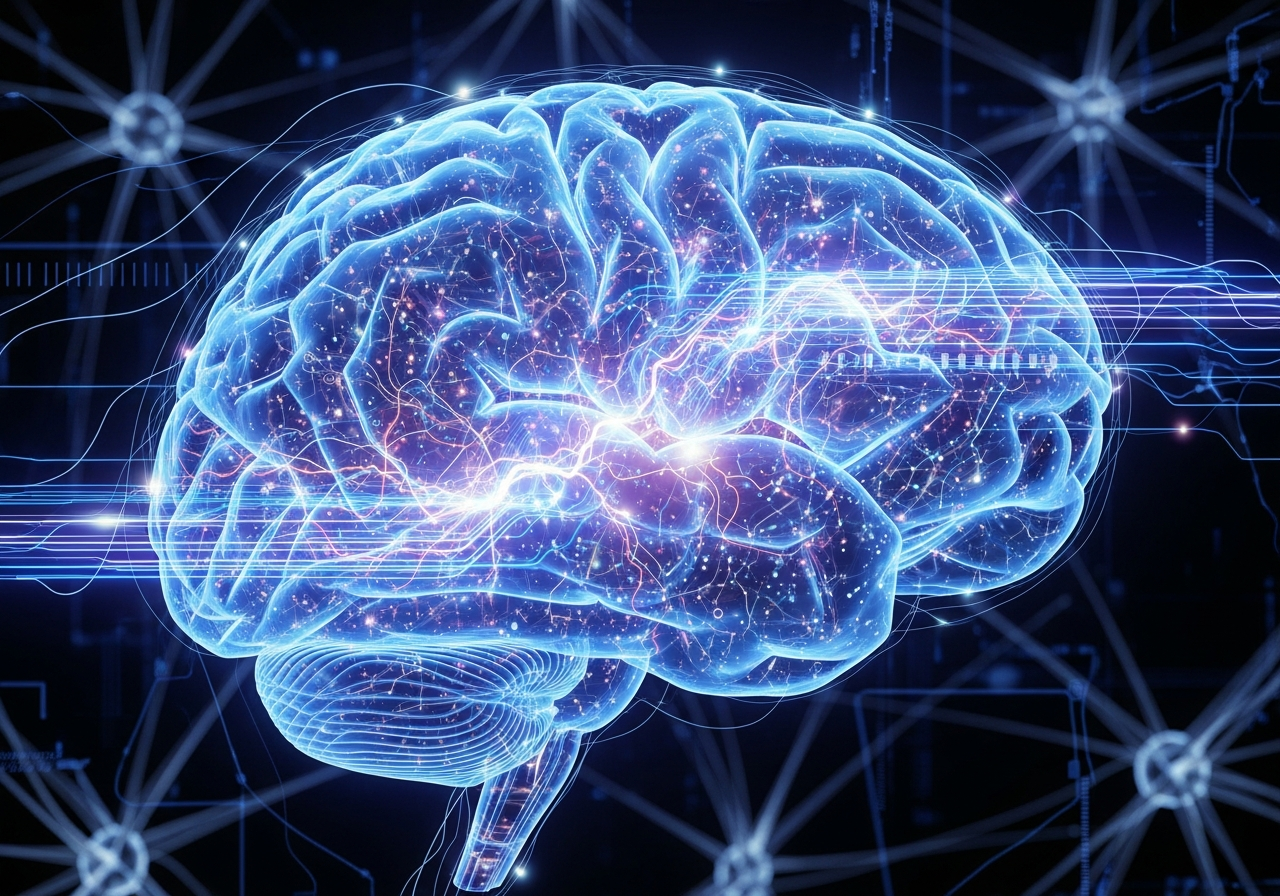
Neuro-Alchemy: How to Rewire Your Brain and Transform Your Mindset
"The brain is like a muscle. When it is in use we feel very good. Understanding is joyous." — Carl Sagan
For most of human history, we believed the brain was fixed.
You were born with a certain amount of intelligence, a certain capacity, a certain set of traits. Whatever you were at 25, you would essentially be at 75. The brain, like a computer's hardware, couldn't really change.
We were catastrophically wrong.
In the latter half of the twentieth century, neuroscientists made one of the most important discoveries in the history of human understanding: neuroplasticity. The brain is not fixed. It can change — dramatically, continuously, throughout your entire life.
Every thought you think, every skill you practice, every experience you have is literally reshaping the physical structure of your brain. Neurons are rewiring. Synapses are strengthening or weakening. New pathways are forming while unused ones fade.
This means that the person you are today does not have to be the person you are tomorrow. Your limiting beliefs, your anxious tendencies, your self-sabotaging patterns — these are not permanent features of who you are. They are neural habits. And neural habits can be changed.
This is neuro-alchemy: the art and science of transforming your mind from within.
Part 1: The Science of Neuroplasticity
What Neuroplasticity Actually Means
Neuroplasticity (also called brain plasticity) is the brain's ability to reorganize itself by forming new neural connections throughout life. It allows neurons (brain cells) to compensate for injury, adjust to new situations, and change in response to experience.
At the cellular level, this means:
- Existing neurons can forge new connections (synaptogenesis)
- Synapses can strengthen or weaken based on use (synaptic plasticity)
- Entirely new neurons can form in certain brain regions (neurogenesis)
- Brain regions can take over functions from damaged areas
At the experiential level, this means:
- You can learn new skills at any age
- You can change emotional patterns and reactions
- You can overcome trauma and rewire fear responses
- You can shift beliefs that you've held for decades
The Neurological Basis of Habits and Beliefs
Where do your habits and beliefs live in your brain? They are encoded as patterns of neural connection.
When you first learn something — a skill, a belief, a behavior — your brain builds a new neural pathway. It's like cutting a new trail through a forest. At first, the trail is faint and hard to follow.
But every time you repeat the behavior or reinforce the belief, you walk that trail again. The neurons "fire together." And as the saying goes, "Neurons that fire together, wire together." The pathway becomes stronger, more efficient, more automatic.
Over time, well-worn pathways become highways — behaviors and beliefs that run on autopilot. This is efficient, but it's also how limiting patterns get stuck. Anxiety, negative self-talk, unhelpful habits — all are just neural pathways that have been reinforced over and over.
The good news: these pathways can be changed. New trails can be cut. Old highways can be allowed to weaken through disuse.
The Key Principles of Neuroplasticity
1. Use it or lose it. Neural pathways that are used grow stronger. Those that aren't used weaken over time (synaptic pruning). This is why skills fade if you don't practice them.
2. Use it and improve it. Focused practice of a skill leads to enhanced neural representation for that skill. The more you do it, the more brain resources are devoted to it.
3. Specificity matters. The nature of the practice shapes the nature of the change. Practicing piano creates different neural changes than practicing basketball. Practicing gratitude creates different changes than practicing rumination.
4. Attention is essential. Mindless repetition produces less change than mindful, focused practice. Attention amplifies plasticity.
5. Age doesn't prevent plasticity. While the brain is most plastic in childhood, it remains changeable throughout life. It's never too late.
6. There's a use-dependent critical window. After a change begins, there's a window when the brain is especially responsive. Timing matters for maximizing the effects of intervention.
Part 2: Identifying What Needs to Change
Before you can rewire your brain, you need to know what wiring needs to change.
Mapping Your Mental Landscape
Your mind is filled with patterns — some helpful, some not. The first step is becoming aware of them.
Categories of mental patterns:
1. Beliefs — What do you hold to be true about yourself, others, and the world?
- "I'm not smart enough."
- "People can't be trusted."
- "Success requires sacrifice of health/happiness."
2. Thought habits — What patterns of thinking do you default to?
- Catastrophizing (imagining the worst)
- Ruminating (replaying negative events)
- All-or-nothing thinking (seeing in extremes)
- Mind-reading (assuming you know what others think)
3. Emotional patterns — What emotional reactions are automatic for you?
- Anxiety in response to uncertainty
- Anger in response to perceived disrespect
- Shame in response to any mistake
4. Behavioral patterns — What habitual behaviors are you running?
- Procrastination
- Seeking approval
- Avoidance of conflict
- Comfort eating
Each of these is a neural pathway. And each can be changed.
The Archaeology of Your Patterns
To change a pattern, it helps to understand where it came from.
Most of our core mental patterns were installed in childhood, when the brain was most plastic and we lacked the critical thinking to evaluate incoming information. Parents, teachers, peers, and culture all contributed scripts that we internalized as truth.
Reflection questions:
- Where did I first learn this belief or pattern?
- Whose voice am I hearing when I think this way?
- What purpose did this pattern serve when it was formed?
- Is this pattern still serving me, or is it just familiar?
You may find that patterns that protected you as a child are sabotaging you as an adult. The hyper-vigilance that helped you survive an unpredictable home now manifests as anxiety in a safe environment. The people-pleasing that kept you safe now prevents you from speaking your truth.
These patterns made sense in their original context. But neuroplasticity means you can update them for your current life.
Part 3: The Rewiring Toolkit
Here are the core techniques for harnessing neuroplasticity to transform your mindset.
Technique 1: Repetition and Consistency
The most fundamental principle: what fires together, wires together. To build a new neural pathway, you need to activate it repeatedly.
For new beliefs:
- Write the new belief daily
- Speak it aloud
- Repeat it when you catch the old belief arising
- Visualize yourself acting as if the belief is true
For new thought habits:
- Practice the new pattern consciously until it becomes automatic
- Use triggers and cues to remind yourself
- Catch the old pattern and consciously redirect
For new behaviors:
- Start small (the 2-minute rule)
- Build the habit daily
- Stack on existing habits for cues
- Track your progress
Consistency matters more than intensity. Five minutes of practice every day beats an hour once a week.
Technique 2: Focused Attention
Neuroplasticity is amplified by attention. When you give something your full focus, the brain marks it as important and devotes more resources to encoding it.
This means:
- Practice new patterns mindfully, not mechanically
- Bring full presence to the moment of change
- Minimize distractions during learning and practice
- Treat each repetition as significant
Meditation is particularly powerful because it trains the capacity for sustained attention itself.
Technique 3: Emotional Engagement
The brain prioritizes what is emotionally significant. Flat, unemotional practice produces less change than engaged, emotionally vivid practice.
To leverage this:
- Connect new beliefs and behaviors to what you care about
- Visualize the benefits of change — vividly
- Feel the emotion of who you want to become
- Use the pain of staying the same as motivation
The more you can feel the change, not just think it, the faster it encodes.
Technique 4: Visualization
Your brain can't fully distinguish between vividly imagined experience and actual experience. When you visualize something intensely, many of the same neural pathways activate as if it were happening.
Athletes have used this for decades. Mental rehearsal improves actual performance.
For mindset change:
- Visualize yourself operating with the new belief or behavior
- Make it as sensory-rich as possible — see, hear, feel the details
- Practice visualization regularly (5-10 minutes daily)
- Combine with actual practice for maximum effect
Technique 5: Cognitive Restructuring
This is the workhorse of cognitive behavioral therapy (CBT), one of the most evidence-based psychological interventions.
The process:
- Catch the negative thought or belief
- Examine it critically — is it really true? What's the evidence?
- Identify cognitive distortions (catastrophizing, overgeneralizing, etc.)
- Generate a more balanced, accurate alternative
- Reinforce the alternative through repetition
This isn't about replacing negative thoughts with blindly positive ones. It's about replacing distorted thoughts with accurate ones.
Technique 6: Environmental Sculpting
Your environment shapes your brain. The inputs you receive, the people you surround yourself with, the spaces you inhabit — all of this is training your neural pathways.
To support neuroplastic change:
- Curate inputs: Read, watch, and listen to content that reinforces who you want to become
- Curate relationships: Spend time with people who embody the mindset you're cultivating
- Curate space: Design your physical environment to support new patterns
You become what you're surrounded by. Surround yourself with what you want to become.
Part 4: Rewiring Specific Patterns
Let's get specific about how to rewire common limiting patterns.
Rewiring Negative Self-Talk
Negative self-talk is often a well-worn neural highway, reinforced over years.
To rewire it:
- Become aware of your inner critic's voice. Notice when it speaks.
- Challenge its claims. Is this actually true? What evidence contradicts it?
- Develop a new "inner coach" voice. What would a supportive mentor say?
- Practice the new voice. Repeat the new internal dialogue deliberately.
- Use interrupts. When the critic speaks, consciously say "STOP" and switch to the new voice.
This takes time. Be patient. Decades of wiring don't undo in a week.
Rewiring Anxiety Responses
Anxiety is often a fear pathway that fires too easily — a false alarm system.
To rewire it:
- Understand how your anxiety works. What triggers it? What thoughts accompany it?
- Practice exposure. Gradually expose yourself to the things you fear. This signals to the brain that they're not actually dangerous.
- Pair exposure with relaxation. Breathe deeply. Stay calm. This rewires the association.
- Reframe the physical sensations. "This isn't fear — it's excitement. My body is preparing me."
- Build a competing pathway. Replace the anxiety response with a confidence or calm response through repeated practice.
Rewiring Limiting Beliefs About Identity
"I'm not the kind of person who..." is one of the most limiting patterns. It closes off entire domains of possibility.
To rewire it:
- Identify the belief. ("I'm not creative." "I'm not athletic." "I'm not a leader.")
- Question the source. Where did this belief come from? Is it actually true, or just familiar?
- Find counterexamples. Have you ever done anything that contradicts this belief? (You almost certainly have.)
- Act as if. Behave as the kind of person you want to become. Each action is a vote for a new identity.
- Redefine the label. "I'm someone who is learning creativity." "I'm becoming more athletic."
Identity is not fixed. You are who you repeatedly practice being.
Part 5: The Conditions for Maximum Neuroplasticity
Certain conditions enhance neural change.
Sleep
Sleep is when the brain consolidates learning and forms new connections. Without adequate sleep, neuroplasticity is severely impaired.
Prioritize 7-9 hours of quality sleep, especially when you're actively working on rewiring patterns.
Exercise
Physical exercise, particularly cardiovascular exercise, significantly boosts neuroplasticity. It increases BDNF (brain-derived neurotrophic factor), a protein that supports the growth of new neurons and connections.
Regular exercise is one of the best things you can do for brain health and change capacity.
Novelty and Challenge
The brain is most plastic when encountering novel, moderately challenging situations. Too easy and there's nothing to adapt to. Too hard and the system shuts down.
Seek the "Goldilocks zone" — challenges that stretch you slightly beyond your current capacity.
Reduced Stress
Chronic stress impairs neuroplasticity. Cortisol damages neurons and inhibits new growth.
Managing stress through mindfulness, exercise, social connection, and lifestyle factors supports the brain's ability to change.
Mindfulness Practice
Regular meditation has been shown to produce measurable changes in brain structure — increasing gray matter in regions associated with learning, memory, emotional regulation, and perspective-taking.
Even short daily practice (10-20 minutes) produces cumulative effects over time.
Conclusion: You Are the Alchemist
The medieval alchemists sought to transform lead into gold.
They failed — because lead cannot become gold through chemistry.
But you have access to a form of alchemy that actually works.
You can transform fear into courage. Doubt into confidence. Limitation into growth. Negativity into resilience.
Not through wishful thinking. Not through affirmations alone. But through the deliberate, consistent practice of rewiring your neural pathways.
This is hard work. It requires patience, repetition, and faith in the process. There will be setbacks. Old patterns will flare up. Progress will sometimes feel invisible.
But the science is clear: your brain can change. And with the right practices, you can direct that change.
The person you were yesterday does not have to be the person you are tomorrow. The limitations you've carried do not have to be the limitations you keep.
You are the alchemist of your own mind.
Get to work.
Action Steps: Begin Your Neural Transformation
Identify one pattern to change. Pick one belief, thought habit, or behavior that limits you. Start there.
Understand its origins. Where did this pattern come from? What purpose did it once serve?
Design your intervention. Using the techniques above, create a plan to rewire this pattern.
Practice daily. Repetition is essential. Commit to at least 5-10 minutes of focused practice every day.
Optimize conditions. Are you sleeping enough? Exercising? Managing stress? Supporting your brain's capacity for change.
Be patient. Neural change is real, but it takes time. Think months, not days.
Your brain is not fixed. You are not stuck. The transformation starts now.