
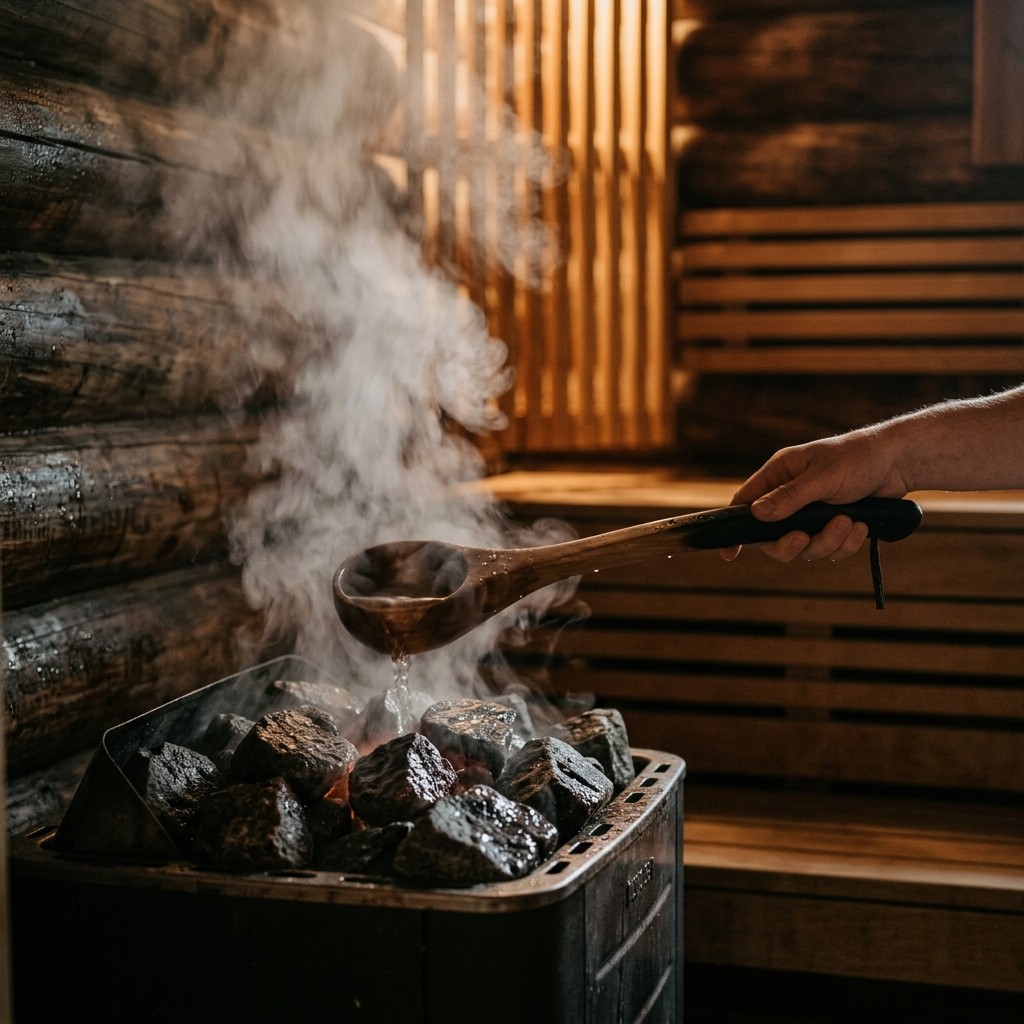
"What does not kill me makes me stronger." — Friedrich Nietzsche
There is a place in eastern Finland where, for two decades, scientists quietly watched a question unfold.
Beginning in the 1980s, researchers at the University of Eastern Finland enrolled more than 2,300 middle-aged men in the Kuopio Ischaemic Heart Disease study and followed them for an average of two decades. They tracked the usual suspects — blood pressure, cholesterol, smoking, fitness. But they also asked something almost no other major study had bothered to measure: how often, and for how long, did these men sit in the sauna?
In Finland, that's a sensible question. There are an estimated three million saunas for a population of about five and a half million. The sauna is not a spa indulgence there; it is a near-daily ritual woven into ordinary life.
When the team, led by cardiologist Jari Laukkanen, published their findings in JAMA Internal Medicine in 2015, the numbers were arresting. Compared to men who used the sauna once a week, men who used it four to seven times a week had roughly half the rate of fatal cardiovascular disease and a substantially lower rate of death from all causes over the study period. The relationship was dose-dependent: more frequent, longer sessions tracked with better outcomes. Later analyses from the same cohort linked frequent sauna use with lower risk of hypertension, stroke, respiratory disease, and even dementia.
Now, an important word of caution up front, because honest science demands it: this is observational research. Men who sauna frequently may differ in other ways — more leisure time, stronger social ties, better baseline health. The researchers adjusted for many factors, but no statistical model removes every confounder. A 20-year Finnish cohort is not a randomized trial.
And yet. The size of the effect, its dose-response shape, the biological plausibility, and a growing body of mechanistic and short-term experimental work have made deliberate heat exposure one of the most intriguing frontiers in longevity and resilience science. This article unpacks what heat actually does to your body, why a controlled dose of stress can make you stronger, and exactly how to practice heat exposure safely.
Part 1: The Principle Behind It — Hormesis and the Wisdom of Controlled Stress
Why a Little Poison Heals
To understand why voluntarily overheating yourself could be good for you, you have to understand hormesis — one of the most important and underappreciated principles in biology.
Hormesis describes a dose-response relationship in which a low or moderate dose of a stressor that would be harmful in large amounts instead triggers an adaptive, beneficial response. The concept traces back to the 16th-century physician Paracelsus, who observed that "the dose makes the poison." Exercise is the most familiar example: a workout is, biochemically, a controlled injury. You damage muscle fibers, generate oxidative stress, and deplete energy stores — and your body responds by rebuilding stronger. The stress is the signal that drives the adaptation.
Deliberate heat works the same way. Sitting in a 80°C (176°F) sauna pushes your core temperature up, raises your heart rate to levels comparable to moderate exercise, and triggers a cascade of stress responses. Your body, sensing the challenge, mounts a coordinated defense — and the residue of that defense is a more resilient organism.
The key word is deliberate. Hormesis is a curve, not a line. Too little stress, no signal. Too much, and you cross from adaptation into damage. The art of heat exposure — like the art of training — is finding the dose that signals without harming.
The Heat Shock Response
When cells get hot, they manufacture a class of molecular guardians called heat shock proteins (HSPs). These were discovered, fittingly, in fruit flies exposed to heat in the 1960s, and they turn out to be among the most ancient and conserved survival mechanisms in all of life.
Heat shock proteins act as molecular chaperones. Their job is to protect other proteins from misfolding and aggregating — and to refold or clear out the ones that have gone wrong. This matters enormously, because protein misfolding sits at the heart of aging itself and of diseases like Alzheimer's and Parkinson's. By upregulating HSPs, heat exposure essentially rehearses and reinforces your cells' quality-control machinery.
Research, including work by physiologist W. Larry Kenney and others, has shown that a sauna session can significantly elevate heat shock protein levels, and that the response adapts: regular heat exposure produces a faster, more robust HSP response over time, much as regular exercise produces a fitter cardiovascular system. This is cellular resilience you are literally training.
FOXO, Autophagy, and the Cellular Spring Cleaning
Heat exposure appears to nudge several of the same longevity-associated pathways that fasting and exercise activate. Among the most interesting is autophagy — the cell's recycling system, in which damaged components are tagged, broken down, and reused. Autophagy declines with age, and its impairment is linked to neurodegeneration and metabolic disease. Heat stress, by generating the kind of mild protein damage that triggers quality-control machinery, is one of the stimuli thought to promote autophagic clearance, working alongside the heat shock protein response.
There's also evidence implicating FOXO transcription factors and the broader stress-response gene networks that govern how cells defend themselves and repair damage. In simple organisms like the worm C. elegans, activating these heat-shock and stress-response pathways can extend lifespan — a finding that helped put hormetic heat on the longevity-science map. Translating worm lifespan to human health is a long leap, and no one should claim sauna "extends lifespan" on that basis. But the convergence is suggestive: deliberate heat seems to pull on the same ancient levers that other proven longevity practices pull on.
Cross-Adaptation: The Stress You Train Transfers
One of the most elegant findings in hormesis research is cross-adaptation — the way training one stressor can build resilience to others. Heat acclimation, well-studied in athletes, doesn't just make you better at tolerating heat. It expands blood plasma volume, improves cardiovascular efficiency, and appears to confer some protection against other stressors.
This connects heat exposure to the broader family of hormetic practices — exercise, fasting, cold exposure — that all converge on overlapping cellular pathways involving stress-response genes, mitochondrial biogenesis, and inflammation regulation. You are not just getting better at being hot. You are training the general machinery of resilience.
Part 2: What Heat Does to Your Body — System by System
Cardiovascular: A Passive Cardio Workout
The most studied benefits are cardiovascular, and the mechanism is intuitive once you feel it. As your skin and core heat up, blood vessels dilate to shed heat toward the surface. Your heart rate climbs — often into the 100–150 beats-per-minute range during a vigorous session — and cardiac output rises substantially. Blood pressure responses vary, but over time regular sauna use is associated with lower resting blood pressure and improved arterial flexibility.
Researchers have directly compared the acute cardiovascular load of a sauna session to that of moderate-intensity exercise. A 2018 study by Laukkanen's group found that a single 30-minute sauna session lowered blood pressure and improved measures of arterial stiffness, with effects persisting after the session. Functionally, your cardiovascular system experiences a sauna as something close to a brisk walk you take sitting down.
The endothelium — the delicate lining of your blood vessels — appears to benefit particularly. Heat-driven increases in nitric oxide and repeated vasodilation seem to improve endothelial function, a key marker of cardiovascular health. This is the most plausible biological story behind the Kuopio mortality findings.
Brain and Mood
The dementia association from the Finnish cohort — frequent users had markedly lower risk of Alzheimer's and other dementias over follow-up — generated headlines, and while it's observational, several mechanisms make it biologically reasonable: improved cardiovascular health protects the brain; heat shock proteins guard against the protein misfolding implicated in neurodegeneration; and heat exposure raises levels of brain-derived neurotrophic factor (BDNF), a protein essential for neuron growth and survival.
There's also a compelling mood angle. A provocative 2016 study by Charles Raison and colleagues, published in JAMA Psychiatry, used whole-body hyperthermia — heating depressed patients to a high core temperature once — and found a significant antidepressant effect that persisted for weeks compared to a sham condition. The proposed mechanism involves heat-sensitive serotonergic circuits and the body's thermoregulatory cooling response. The finding is from a single small trial and needs replication, but it dovetails with the long-reported mood lift of a good sauna and with the warmth-affiliation links in psychology.
Muscles, Recovery, and the "Exercise Mimetic" Question
Heat exposure shows real promise for recovery and even for partially preserving fitness. Studies of heat application and sauna use after exercise suggest benefits for muscle recovery and reductions in soreness. More intriguingly, some research, including work associated with physiologist Thomas Hornberger and others on heat and muscle, indicates that heat stress may activate pathways that reduce muscle protein breakdown and support muscle maintenance — relevant for injury recovery and aging.
This has led some to call sauna an "exercise mimetic." That framing oversells it. Heat exposure shares some downstream signals with exercise and may amplify or partially preserve adaptations — but it is a complement to physical activity, not a replacement for it. No sauna builds the strength, bone density, or metabolic capacity that loading your muscles does.
Metabolic and Hormonal Ripples
Heat exposure sends ripples through your metabolism and endocrine system as well. Acute heat stress triggers a surge in growth hormone in some protocols — older research found that sauna bathing under certain conditions could raise growth hormone substantially, a hormone involved in tissue repair and maintenance. Heat also influences insulin sensitivity and glucose handling; the hot-bath research from Loughborough mentioned later in this article found improvements in blood-sugar control after immersion, and heat shock proteins themselves appear to play a role in healthy glucose metabolism.
There's also an intriguing thermoregulatory angle on mood and stress hormones. Repeated heat exposure appears to improve the body's stress-response regulation over time — part of the cross-adaptation story — which may translate into better resilience to everyday psychological stress, not just physical heat. As always, much of this rests on small studies and animal work, so hold the specifics loosely. But the broad picture is consistent: a heat session is not a passive soak. It is a whole-body event that nudges hormones, metabolism, and the stress axis in directions that, in moderate doses, appear adaptive.
Detox, Skin, and the Claims to Be Skeptical Of
Sweating feels purifying, and saunas are often marketed as "detox." Be appropriately skeptical here. Your liver and kidneys handle the overwhelming majority of detoxification; sweat is mostly water and electrolytes, with only trace quantities of metals and other compounds. The evidence that sauna sweating meaningfully clears toxins is weak. The genuine benefits are cardiovascular, neurological, recovery-related, and psychological — not detoxification in the marketing sense. Enjoy the clean-feeling glow; don't build a health theory on it.
Inflammation, Immunity, and the Long Game
One of the quieter but most consequential effects of regular heat exposure concerns chronic inflammation — the low-grade, smoldering immune activation now recognized as a driver of aging itself and of nearly every major chronic disease, from heart disease to diabetes to neurodegeneration. Researchers sometimes call this "inflammaging."
Heat exposure appears to have a net anti-inflammatory effect over time. While a single sauna session produces a brief acute stress response, regular use is associated in some studies with lower levels of chronic inflammatory markers such as C-reactive protein. The heat shock proteins discussed earlier are part of this story — they help maintain cellular order and dampen the cellular dysfunction that fuels inflammation. The Loughborough hot-bath research even found an anti-inflammatory response to immersion that paralleled, in certain respects, the response to exercise.
There's an immune dimension too. Beyond Qing Li's natural-killer-cell findings, regular heat exposure has been associated in some research with reduced incidence of respiratory infections — a Finnish study found frequent sauna users reported fewer colds. The proposed mechanisms range from the heat itself being inhospitable to some pathogens, to a kind of immune "rehearsal" that keeps defenses primed. As ever, the evidence is suggestive rather than definitive. But the convergence is notable: regular heat seems to tilt the body away from the chronic, low-grade inflammation that quietly underlies so much of what goes wrong as we age.
Part 3: The Many Forms of Heat — Choosing Your Modality
Not all heat is created equal, and the practical experience varies widely. Here's how the main options compare.
Traditional Finnish (Dry) Sauna
The most-studied modality, and the one behind the Finnish research. Air temperatures typically run 70–100°C (158–212°F) at low humidity, with the option to throw water on hot stones (löyly) to create bursts of steam that intensify the perceived heat. Sessions of 5–20 minutes are typical. If you want to mirror the conditions in the longevity data, this is the gold standard.
Steam Room
Lower air temperatures, around 40–50°C (104–122°F), but near 100 percent humidity. Because the moist air prevents sweat from evaporating, it can feel as intense as a hotter dry sauna. Steam rooms are easier on the respiratory tract for some people and may feel more tolerable, but they have less direct longevity research behind them.
Infrared Sauna
Infrared saunas heat your body directly with radiant energy rather than heating the surrounding air, so the ambient temperature is much lower — often 45–60°C (113–140°F). They're popular for being more tolerable and easier to install at home. The catch: most of the landmark longevity research used traditional saunas, not infrared. Infrared has its own small but growing evidence base for blood pressure and recovery, and it likely produces genuine heat adaptations, but you should be cautious about assuming the Finnish mortality numbers transfer directly. Lower core-temperature elevation may mean a smaller hormetic dose.
Hot Baths
Don't overlook the humble hot bath. Japanese research on regular hot bathing (onsen and home baths) has linked frequent bathing to better cardiovascular outcomes, and a notable study from Loughborough University by Steve Faulkner and colleagues found that a hot bath raised core temperature, improved aspects of blood sugar control, and produced an anti-inflammatory response comparable in some respects to exercise. A hot bath also has the advantage of accessibility — most people have a bathtub. For raising core temperature, immersion is efficient.
The practical takeaway: if longevity data is your priority, favor traditional sauna or hot immersion. If access and tolerability matter most, infrared or a hot bath still deliver meaningful heat stress. The best modality is the one you'll do consistently.
Part 4: The Heat Protocol — How to Practice Safely and Effectively
This is the operational core. Heat is a real physiological stressor, so dosing and safety both matter.
Building Your Frequency and Duration
The Finnish data points clearly to frequency as the strongest correlate of benefit. The men with the best outcomes used the sauna four to seven times per week. That may be unrealistic for most non-Finns, but it sets the direction.
A reasonable target, well-aligned with the research:
- Frequency: Aim for 2–4 sessions per week to start; more if you can sustain it. Even 2–3 weekly sessions fell in the beneficial range in the cohort data.
- Duration: Work toward 15–20 minutes per session at traditional sauna temperatures. The beneficial-outcome group in Kuopio averaged sessions over about 19 minutes. Start shorter — 5–10 minutes — and build.
- Temperature: Traditional sauna benefits appeared around 80°C and above. Don't chase extreme heat; consistency at a tolerable temperature beats heroics.
Progress gradually. If you're new, begin with shorter, cooler sessions and let your body acclimate over several weeks. Heat tolerance is trainable, and pushing too hard too soon is how people get hurt or quit.
A Sample Session
- Hydrate beforehand. Drink a glass or two of water in the half hour before. You will lose meaningful fluid through sweat.
- Enter and settle. Sit or lie down. Breathe slowly. Let the heat build.
- Stay 10–20 minutes, to your tolerance. Sweating profusely, slightly elevated heart rate, and a strong urge to cool down are normal endpoints. Dizziness, nausea, or confusion are not — exit immediately if they appear.
- Cool down. Step out, breathe, and let your body shed heat. A cool shower or cold plunge here is optional and adds a contrast-therapy element many enjoy.
- Optionally repeat. Many traditional practitioners do 2–3 rounds with cool-downs between. Build to this gradually.
- Rehydrate and replenish electrolytes afterward, especially after long or repeated rounds.
Stacking Heat With Other Practices
- After exercise: Post-workout sauna may enhance recovery and amplify some adaptations. It's also simply convenient — you're already at the gym, already warm.
- Contrast therapy: Alternating heat with cold (sauna then cold plunge) is a centuries-old Nordic tradition. The evidence for cold's additive benefits is still developing, but many find the contrast invigorating and good for mood and alertness. If you combine them, listen closely to your cardiovascular response.
- Evening wind-down: A sauna or hot bath 1–2 hours before bed can aid sleep. The mechanism is elegant: heating your body triggers a compensatory drop in core temperature afterward, and that falling temperature is one of the body's strongest sleep signals — the same principle behind the warm-bath effect in sleep research.
Safety: The Non-Negotiables
Heat exposure is a stressor, and stressors have contraindications. This article is educational, not medical advice — talk to your doctor before starting heat protocols if any of the following apply, and stop and seek help if you feel unwell.
- Hydration is mandatory. Dehydration is the most common cause of sauna-related problems.
- Never use heat under the influence of alcohol. The combination of alcohol's vasodilation and impaired thermoregulation and judgment is genuinely dangerous and implicated in sauna deaths. This is non-negotiable.
- Pregnancy: Pregnant women are generally advised to avoid prolonged heat exposure, particularly in the first trimester, due to risks associated with elevated core temperature. Consult an obstetrician.
- Cardiovascular conditions: People with unstable heart disease, recent heart attack, severe aortic stenosis, or poorly controlled blood pressure should get medical clearance. (Notably, research suggests sauna is generally safe and even beneficial for many people with stable cardiovascular disease — but individual clearance matters.)
- Children, the elderly, and those on medications affecting blood pressure, hydration, or thermoregulation should take extra care.
- Don't sauna alone if you're new or unwell, and never lock yourself in. Exit at the first sign of dizziness, nausea, headache, or confusion.
Used wisely, heat is remarkably safe for healthy people. Used carelessly, it is a stressor like any other. Respect the dose.
Part 5: The Bigger Picture — Heat as a Resilience Practice
Comfort Is Making Us Fragile
Step back and the appeal of heat exposure becomes about more than blood vessels and proteins. For nearly all of human history, our ancestors lived inside a wide band of physiological challenge — temperature swings, hunger, physical exertion, environmental stress. Their bodies were continually prompted to adapt.
Modern life has engineered nearly all of that away. We live in a narrow, climate-controlled comfort zone: 21°C year-round, food always available, exertion optional. It's a triumph of civilization — and a problem. The same hormetic biology that made our ancestors robust now goes largely unsignaled. A body that is never challenged forgets how to adapt.
Deliberate heat exposure is one way to reintroduce a controlled, beneficial stressor into a too-comfortable life. So is exercise. So is fasting, cold, and hard physical work. They share a philosophy: voluntary discomfort, applied skillfully, builds the resilience that comfort erodes.
The Discipline of Voluntary Discomfort
There's a psychological dimension worth naming. Sitting in a sauna when every instinct says get out is a small daily practice in tolerating discomfort without panicking — in staying calm while your physiology screams. Many regular practitioners report that this transfers: the equanimity you build under heat shows up under other kinds of stress.
This echoes the Stoic practice of voluntary hardship, which the philosopher Seneca advocated two thousand years ago — periodically choosing discomfort so that you master it rather than fear it. Heat exposure is, among other things, a training ground for your relationship with discomfort itself.
Holding the Evidence Honestly
Let's end this section where we began: with appropriate humility. The strongest sauna data is observational. The whole-body hyperthermia depression finding is a single small trial. Much of the mechanistic work is in cells, animals, or short human studies. Heat exposure is genuinely promising, biologically plausible, and — for healthy people, done safely — low-risk and pleasant. But it is an adjunct to the foundations of health, not a magic bullet, and not a substitute for sleep, movement, nutrition, and connection.
Treat it as what it most likely is: a powerful, ancient, enjoyable hormetic practice that complements a well-built life.
Conclusion: Embrace the Heat
The Finnish men who sat in their saunas four times a week weren't chasing biohacks. They were doing what their culture had always done — sweating, relaxing, enduring a little heat, then cooling off and getting on with life. That this ordinary ritual coincided with halved cardiovascular mortality is one of the more poetic findings in modern health science.
You don't need to move to Finland. You need access to heat — a sauna, a steam room, an infrared cabin, or a hot bathtub — and the willingness to spend a few uncomfortable minutes in it, several times a week, for the rest of your life.
Comfort feels like the goal. But the body, it turns out, grows strong on a steady diet of challenges it can overcome. Heat is one of the oldest and most pleasant of them.
Sweat well.
Action Steps: Build Your Heat Habit
Find your heat source. Locate a sauna, steam room, or infrared cabin near you — or commit to using your own bathtub for hot immersion. Access drives consistency; solve this first.
Get cleared if you need to. If you have any cardiovascular condition, are pregnant, or take blood-pressure or thermoregulation-affecting medication, talk to your doctor before starting. This is the one step you don't skip.
Start small and build. Begin with 5–10 minute sessions at a tolerable temperature, twice a week. Add a few minutes and a session per week as your tolerance grows, working toward 15–20 minutes, 2–4 times weekly.
Hydrate around every session. Two glasses of water before, more after — with electrolytes following long or repeated rounds. Never combine heat with alcohol.
Use the evening sauna for sleep. Try a session or hot bath 1–2 hours before bed and notice how the post-heat temperature drop deepens your sleep.
Stack it with your workouts. Add a sauna session after exercise once or twice a week to aid recovery and double up on the resilience signal.
Practice staying calm in the heat. Treat each session as training for equanimity under stress — slow your breath, relax into the discomfort, and exit the moment anything feels genuinely wrong, not a second before you choose to.
The heat is waiting. Step in, and let your biology do what it was built to do.