
"All disease begins in the gut." — Attributed to Hippocrates
You've felt it your whole life, even if you never thought of it as science.
The flutter of butterflies before you walk on stage. The pit in your stomach when you hear bad news. The way anxiety ties your belly in knots, or how a hard decision can make you feel literally sick. The phrase "trust your gut" isn't poetic license — it's an unconscious acknowledgment of something neuroscience is only now mapping in detail: your gut and your brain are in constant, intimate conversation, and that conversation shapes how you feel, think, and decide far more than you realize.
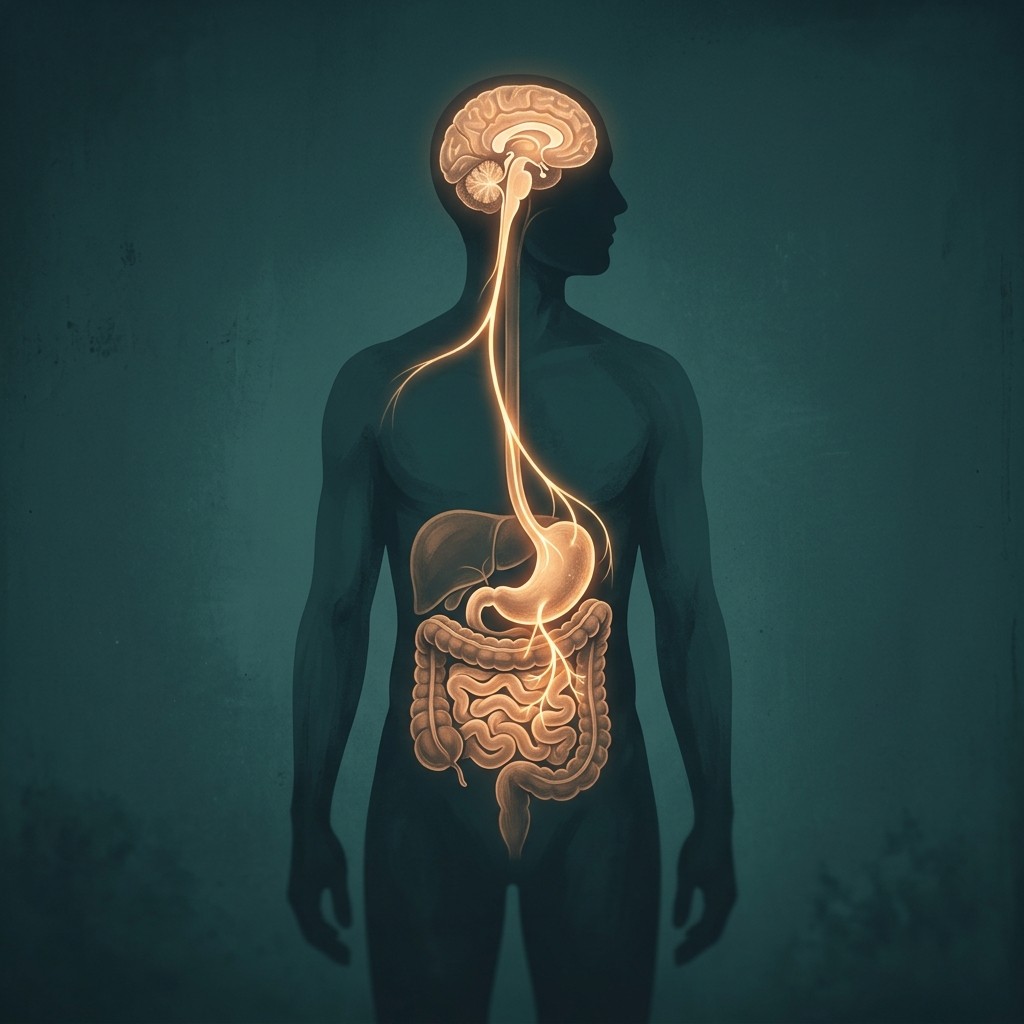
Tucked into the walls of your digestive tract is a sprawling network of neurons — roughly 500 million of them — so extensive and so capable of operating independently that scientists call it the "enteric nervous system," or more colloquially, your second brain. It's larger than the entire nervous system of a cat. It can run your digestion without any instruction from your skull-brain. And it's wired directly into your central nervous system through a massive information highway, the vagus nerve, along which signals flow constantly in both directions.
But the second brain is only half the story. Living inside your gut is a teeming ecosystem of trillions of microorganisms — bacteria, fungi, viruses — collectively known as your microbiome. These microbes are not passive hitchhikers. They are metabolically active, they produce neurotransmitters and other signaling molecules, and through them they participate in regulating your mood, your stress response, your immune system, and your brain function. You are, in a very real sense, a walking ecosystem — and the health of that ecosystem influences the health of your mind.
This is one of the most exciting frontiers in modern science. Researchers like John Cryan and Ted Dinan at University College Cork, pioneers of microbiome-gut-brain research, have produced a body of work showing just how deeply our microbial inhabitants shape our psychology. In this guide, you'll learn how the gut-brain axis actually works — and, crucially, how to use that knowledge to feed your mind through your belly.
Part 1: Meet Your Second Brain
The Enteric Nervous System
When most people think of their nervous system, they picture the brain and the spinal cord. But there's a third major component that gets almost no attention: the enteric nervous system, embedded in the lining of your gastrointestinal tract from esophagus to rectum.
This network of hundreds of millions of neurons is remarkable for its autonomy. While it communicates with the brain, it doesn't depend on it. The enteric nervous system can sense the contents of your gut, coordinate the rhythmic muscle contractions that move food along, regulate the secretion of digestive enzymes, and control blood flow — all on its own. Sever its connection to the brain entirely, and it would keep digestion running. No other organ system has anything like this degree of independent neural control. That's why it earns the title of "second brain."
But it's not isolated. The enteric nervous system is in constant dialogue with the central nervous system, and the channel for that dialogue is one of the most important nerves in your body.
The Vagus Nerve: The Information Superhighway
The vagus nerve — the same wandering nerve central to the breathwork we discussed — is the primary cable connecting your gut and your brain. And here's a fact that reorders how most people picture this relationship: roughly 80 to 90 percent of the nerve fibers in the vagus carry information from the gut up to the brain, not the other way around.
Read that again. The traffic on this highway is overwhelmingly bottom-up. Your gut is sending vastly more information to your brain than your brain is sending to your gut. Your second brain is not primarily taking orders — it's reporting, constantly, on the state of your interior. Signals about what you've eaten, the state of your gut lining, the activity of your microbes, the presence of inflammation, levels of various molecules — all of it streams up to the brain and influences your mood, your appetite, your alertness, and your sense of well-being, often entirely below the level of conscious awareness.
This is the physical basis of "gut feelings." When you have an intuition or an emotional reaction that seems to come from your belly, you're partly experiencing the upward flow of this visceral information being integrated by your brain into your felt sense of how things are.
The Surprising Source of Your Serotonin
Here's a fact that genuinely surprises most people. Serotonin — the neurotransmitter most associated with mood, well-being, and the target of common antidepressants — is overwhelmingly produced not in the brain, but in the gut. Around 90 to 95 percent of your body's serotonin is made in the cells lining your digestive tract.
Now, an important nuance: the serotonin made in the gut doesn't simply float up and into the brain — it can't easily cross the blood-brain barrier, and it plays major roles in regulating gut motility and other functions right there in the digestive system. But the gut's serotonin system, and the microbes that influence it, are deeply involved in the signaling that ultimately affects mood and brain function. The same is true of other neuroactive compounds: gut bacteria produce or modulate GABA (a calming neurotransmitter), dopamine precursors, and short-chain fatty acids that influence the brain.
The upshot is unmistakable. The chemistry of your emotional life is intimately tangled up with the chemistry of your gut. You cannot fully separate "mental health" from "gut health." They are two faces of one interconnected system.
The Gut Lining: A Border Under Constant Negotiation
To understand why gut health matters so much for the mind, it helps to appreciate the extraordinary interface where your inner world meets the outside one. The lining of your gut is a single layer of cells — astonishingly thin given its importance — that separates the contents of your digestive tract from your bloodstream and the rest of your body. This barrier has to perform a delicate balancing act: it must let nutrients pass through while keeping out bacteria, toxins, and undigested food particles that would trigger an immune response if they slipped into circulation.
When this barrier is healthy, it does its job beautifully. But when it's compromised — a condition sometimes informally called "leaky gut," more technically increased intestinal permeability — the tight junctions between cells loosen, and molecules that should stay in the gut begin to leak into the bloodstream. The immune system responds to these intruders with inflammation, and that inflammation is systemic, reaching the brain. This is one of the central pathways by which poor gut health translates into poor mental health: a damaged barrier creates a chronic, low-grade inflammatory signal that the brain interprets, in part, as the biochemistry of low mood and fatigue. A well-fed microbiome, by contrast, helps maintain the integrity of this barrier — beneficial bacteria and their byproducts literally help keep the gut wall sealed and strong. Caring for your gut lining, then, is one of the quieter but more important ways you care for your brain.
Part 2: The Microbiome — Your Inner Ecosystem
Trillions of Tiny Tenants
Inside your gut lives a community of microorganisms so vast that the cells in your body are roughly equaled or outnumbered by them. This microbiome contains thousands of species and carries millions of genes — far more genetic information than your own genome. In a meaningful sense, you are a superorganism: a partnership between human cells and microbial cells, each depending on the other.
These microbes earn their keep. They break down fibers your own enzymes can't digest, synthesize certain vitamins, train and regulate your immune system, protect against harmful pathogens, and — most relevant here — produce a steady stream of chemical signals that influence your brain. The composition of this community — which species flourish, which are scarce — turns out to matter enormously for both physical and mental health.
And here's the empowering part: your microbiome is not fixed. Unlike your genome, which you're stuck with, your microbial community shifts in response to what you eat, how you sleep, how stressed you are, and how you live. You are gardening this ecosystem every day, for better or worse, with every meal.
How Microbes Talk to Your Brain
The microbiome influences the brain through several overlapping channels, and understanding them helps explain why gut health is mental health.
Through neurotransmitters and their precursors. Certain gut bacteria produce GABA, the brain's main calming neurotransmitter, and influence the production of serotonin and dopamine. Others produce or modulate the building blocks the brain needs to make its own.
Through short-chain fatty acids. When beneficial bacteria ferment dietary fiber, they produce short-chain fatty acids like butyrate. These compounds nourish the cells of the gut lining, reduce inflammation, and have been shown to influence brain function and even support the integrity of the blood-brain barrier.
Through the immune system and inflammation. A large share of your immune system resides in and around your gut. The microbiome trains and calibrates it. When the gut ecosystem is disrupted, it can drive low-grade, chronic inflammation — and inflammation is increasingly implicated in depression, anxiety, brain fog, and cognitive decline. This is one of the most important and well-supported links in the whole field.
Through the vagus nerve directly. Microbes and their byproducts stimulate the vagus nerve, sending signals up to the brain. In striking animal studies, certain beneficial bacteria reduced anxiety-like behavior — but the effect vanished when the vagus nerve was cut, demonstrating the nerve's role as a literal communication line.
The Evidence That Microbes Shape the Mind
How confident should you be that microbes really affect mood and behavior? The animal evidence is dramatic. Researchers have transplanted gut bacteria from anxious or depressed-behaving mice into calm ones — and the calm mice took on the anxious behavior. They've raised "germ-free" mice with no microbiome at all and found abnormal stress responses and brain development that could be partially corrected by introducing bacteria. The team of John Cryan and Ted Dinan coined the term "psychobiotics" for beneficial bacteria with mental-health effects.
In humans, the evidence is younger and we should be appropriately careful — much of it is correlational, and the field is still maturing. But the patterns are consistent and growing. People with depression tend to show differences in microbiome composition compared to healthy controls. Some randomized trials of probiotics or dietary changes have shown modest improvements in mood and stress. Large dietary-pattern studies, like the "SMILES" trial published in BMC Medicine led by Felice Jacka, found that a Mediterranean-style dietary intervention produced meaningful improvements in people with depression — a landmark result in the emerging field of nutritional psychiatry.
The honest summary: this is a real and important phenomenon, the foundations are solid, and the practical implications for diet and lifestyle are already actionable — even as the deeper clinical applications continue to be worked out.
Stress Flows Both Ways
One of the most important features of the gut-brain axis is that the communication is genuinely bidirectional, and nowhere is this clearer than with stress. Yes, the gut influences the brain — but the brain also profoundly influences the gut. When you're stressed, your brain sends signals down to your digestive system that alter gut motility, change the secretion of digestive juices, increase the permeability of the gut lining, and even shift the composition of your microbiome.
This creates a feedback loop that can spin in either direction. Chronic stress degrades your gut, and a degraded gut sends inflammatory and dysregulated signals back up to the brain that worsen your mood and your stress response, which then further degrades your gut. It's a vicious cycle that helps explain why prolonged stress so reliably wrecks digestion — and why digestive distress so reliably worsens mood. But the same loop can run virtuously: calm the nervous system, and you protect the gut; heal the gut, and you support a calmer mind. This is why interventions that target the nervous system, like the breathwork and stress-management practices covered elsewhere on this blog, are also gut-health interventions, and vice versa. You can enter this interconnected system from either end.
Part 3: How a Healthy Gut Improves Mood, Focus, and Decisions
Mood and Emotional Stability
Given everything above, the link to mood follows naturally. A diverse, well-fed microbiome producing plentiful short-chain fatty acids, keeping inflammation low, and supporting healthy neurotransmitter signaling creates a biochemical environment that favors emotional stability. A disrupted, inflamed gut does the opposite — and that inflammatory signaling reaching the brain is associated with the low mood, fatigue, and loss of motivation that characterize depression.
This doesn't mean diet is a cure-all for mental illness, and no one should swap their treatment for a smoothie. But it does mean that what you eat is one genuine, modifiable lever on your emotional baseline. Many people who clean up a chaotic, inflammatory diet report, within weeks, that their mood is more even and their dark spells less frequent. The science offers a plausible mechanism for why.
Focus, Energy, and Brain Fog
"Brain fog" — that fuzzy, unfocused, sluggish mental state — is increasingly understood to have roots in the gut for many people. Chronic gut inflammation, blood-sugar volatility from a poor diet, and disrupted microbial signaling can all degrade the clarity and stamina of your thinking.
There's also the matter of blood sugar, which connects directly to focus. A meal of refined carbohydrates and sugar spikes your blood glucose, then drops it sharply, producing the familiar crash of fatigue, irritability, and difficulty concentrating. A gut-friendly diet rich in fiber slows the absorption of sugar, smooths out those swings, and supports the steady energy that sustained focus requires. The fiber also feeds the bacteria that produce the anti-inflammatory short-chain fatty acids that support clear cognition. You feed the bugs, the bugs feed your brain.
The Gut and Your Decisions
This is the most provocative frontier: the idea that your gut influences not just how you feel but what you choose. The visceral signals streaming up the vagus nerve form part of the raw material your brain uses to generate emotions, and emotions are deeply involved in decision-making — far more than the myth of the purely rational chooser suggests.
The neuroscientist Antonio Damasio's "somatic marker hypothesis" proposed that bodily signals — including those from the gut — tag options with emotional value and guide our choices, often before conscious reasoning kicks in. When you have a "gut feeling" that something is right or wrong, you may be reading these interoceptive signals. A gut that is inflamed, dysregulated, and sending noisy distress signals upward may color your decisions with a baseline of unease, pessimism, or impulsivity. A calm, well-regulated gut may support clearer, steadier judgment. We should hold this with appropriate humility — the research is young — but the basic architecture connecting visceral state to decision-making is well established.
Part 4: How to Feed Your Second Brain
Now the practical heart of the matter. Here is how to cultivate a gut ecosystem that supports your mind, grounded in the strongest available evidence.
Eat for Diversity and Fiber
If there's one principle that towers above all others in gut health, it's this: eat a wide diversity of plants, rich in fiber. Different microbial species feed on different fibers, so the more varied your plant intake, the more diverse and resilient your microbiome becomes. One widely cited project, the American Gut Project, found that people who ate 30 or more different plant types per week had markedly more diverse microbiomes than those who ate 10 or fewer.
"Plants" here means the full spectrum: vegetables, fruits, whole grains, legumes, nuts, seeds, herbs, and spices. Each counts toward your diversity tally. Fiber is the key fuel — it's the "prebiotic" that beneficial bacteria ferment into the short-chain fatty acids that nourish your gut and brain. Most people in industrialized countries eat far too little of it.
Practical move: Aim for a high-fiber, high-diversity plate. Count your weekly plant types and push the number up. Include particularly fiber-rich and prebiotic foods like onions, garlic, leeks, asparagus, oats, legumes, and slightly-green bananas.
Include Fermented Foods
Beyond feeding your existing microbes, you can introduce beneficial ones directly through fermented foods. A notable study from Stanford researchers Justin and Erica Sonnenburg and Christopher Gardner, published in Cell, found that a diet high in fermented foods increased microbiome diversity and, strikingly, decreased markers of inflammation — a direct, measurable benefit to a system tightly linked to mood and brain health.
Fermented foods to consider: yogurt and kefir with live cultures, sauerkraut, kimchi, miso, tempeh, kombucha, and other traditionally fermented vegetables. Aim to include some most days. Start slowly if you're not used to them, as your gut adjusts.
Reduce the Gut Disruptors
Just as some foods nourish your microbiome, others degrade it. The Western dietary pattern — high in ultra-processed foods, refined sugar, unhealthy fats, and artificial additives, and low in fiber — is associated with reduced microbial diversity, increased inflammation, and a "leaky" gut lining that lets inflammatory molecules into the bloodstream.
You don't need perfection. But meaningfully reducing ultra-processed foods and added sugars, while increasing whole foods and fiber, is one of the highest-leverage things you can do for both your gut and your mind. Some research also raises questions about certain artificial sweeteners and emulsifiers affecting the microbiome, which is another reason to favor whole, minimally processed foods.
Don't Forget the Lifestyle Factors
Diet is the biggest lever, but the gut-brain axis runs both ways, and your mental state feeds back onto your gut. Several lifestyle factors matter:
Stress. Chronic stress disrupts the microbiome and the gut lining directly — another reason the relationship is bidirectional. Managing stress (through breathwork, exercise, sleep, and the practices covered elsewhere on this blog) protects your gut, which in turn supports your mind. It's a virtuous or vicious cycle, depending on which way you push it.
Sleep. Poor sleep disrupts the microbiome, and gut health influences sleep in return. The two systems are entangled. Protecting your sleep protects your gut.
Exercise. Physical activity has been associated with greater microbial diversity, independent of diet. Movement is good for your bugs.
Antibiotics. These life-saving drugs also wipe out large swaths of your microbiome. Use them when genuinely needed, of course, but be aware that recovery of the ecosystem takes time, and supporting it with fiber and fermented foods afterward is wise.
A Note on Probiotics and Patience
Probiotic supplements are popular, and some have evidence behind specific strains for specific purposes. But they're not a magic bullet, the quality and evidence vary widely by product, and a supplement can't compensate for a poor overall diet. For most people, the foundation should be food: diversity, fiber, and fermented foods. Think of probiotics as a possible supporting player, not the star.
It also helps to distinguish probiotics from prebiotics, because the two are often confused. Probiotics are the beneficial live microbes themselves — the bacteria you introduce through fermented foods or supplements. Prebiotics are the fibers and compounds that feed the beneficial microbes already living in you. In many ways, prebiotics are the more important and more reliable lever: rather than trying to add new tenants to your gut (who may or may not take up residence), you're nourishing and growing the helpful populations you already host. This is why dietary fiber deserves such emphasis. Foods rich in prebiotic fiber — onions, garlic, leeks, asparagus, oats, slightly-green bananas, legumes — are essentially fertilizer for your existing beneficial bacteria. The most robust strategy combines both: prebiotic fiber to feed the good microbes, and fermented foods to introduce more of them.
Finally, patience. Your microbiome shifts within days of dietary change, but building a robust, diverse, resilient ecosystem is the work of weeks and months of consistent good feeding. This is a long-term relationship with the trillions of allies inside you. Tend the garden steadily, and it will tend to you.
Conclusion: Trust Your Gut — and Take Care of It
For most of medical history, we treated the gut as a simple tube — a place where food was broken down and waste expelled, far removed from the lofty business of the mind. That view is now obsolete. We know the gut houses a second brain of half a billion neurons, hosts an ecosystem of trillions of microbes, produces the lion's share of our serotonin, and broadcasts a continuous stream of information up to the brain that shapes our mood, focus, and even our choices.
This changes how you should think about self-improvement. You cannot optimize your mind while neglecting your gut, because they are not separate projects — they are one integrated system. The fork in your hand is, in a real sense, a tool for tuning your brain. Every meal is a message to your microbiome and, through it, to your mind.
The ancient instinct to "trust your gut" turns out to be wiser than we knew. But to trust it, you have to take care of it. Feed it diversity and fiber. Populate it with beneficial microbes. Protect it from chronic stress and poor sleep. Do that, and your second brain becomes a powerful ally — a quiet, ever-working partner in your mood, your clarity, and your well-being.
Feed the ecosystem within. It will feed the mind above.
Action Steps: Nourish Your Gut-Brain Axis
Chase plant diversity. Track how many different plant types you eat in a week and push toward 30. Variety, not just quantity, builds a resilient microbiome.
Load up on fiber. Make fiber-rich whole foods — vegetables, legumes, whole grains, nuts, seeds — the foundation of your plate. Fiber is the fuel your beneficial bacteria need.
Add fermented foods most days. Incorporate yogurt, kefir, sauerkraut, kimchi, miso, or kombucha to introduce beneficial microbes and lower inflammation. Start slowly and build up.
Cut the disruptors. Meaningfully reduce ultra-processed foods and added sugars. You don't need perfection — just a steady shift toward whole foods.
Manage stress to protect your gut. Use breathwork, movement, and sleep to lower chronic stress, which directly damages your microbiome and gut lining.
Protect your sleep and move your body. Both independently support a diverse, healthy microbiome. The gut, brain, sleep, and movement systems are all entangled.
Be patient and consistent. Treat your microbiome as a garden you tend over months, not a switch you flip. Steady, varied, whole-food feeding compounds into lasting gut and brain health.
Your second brain is always listening to your first. Feed it well, and the whole system thrives.