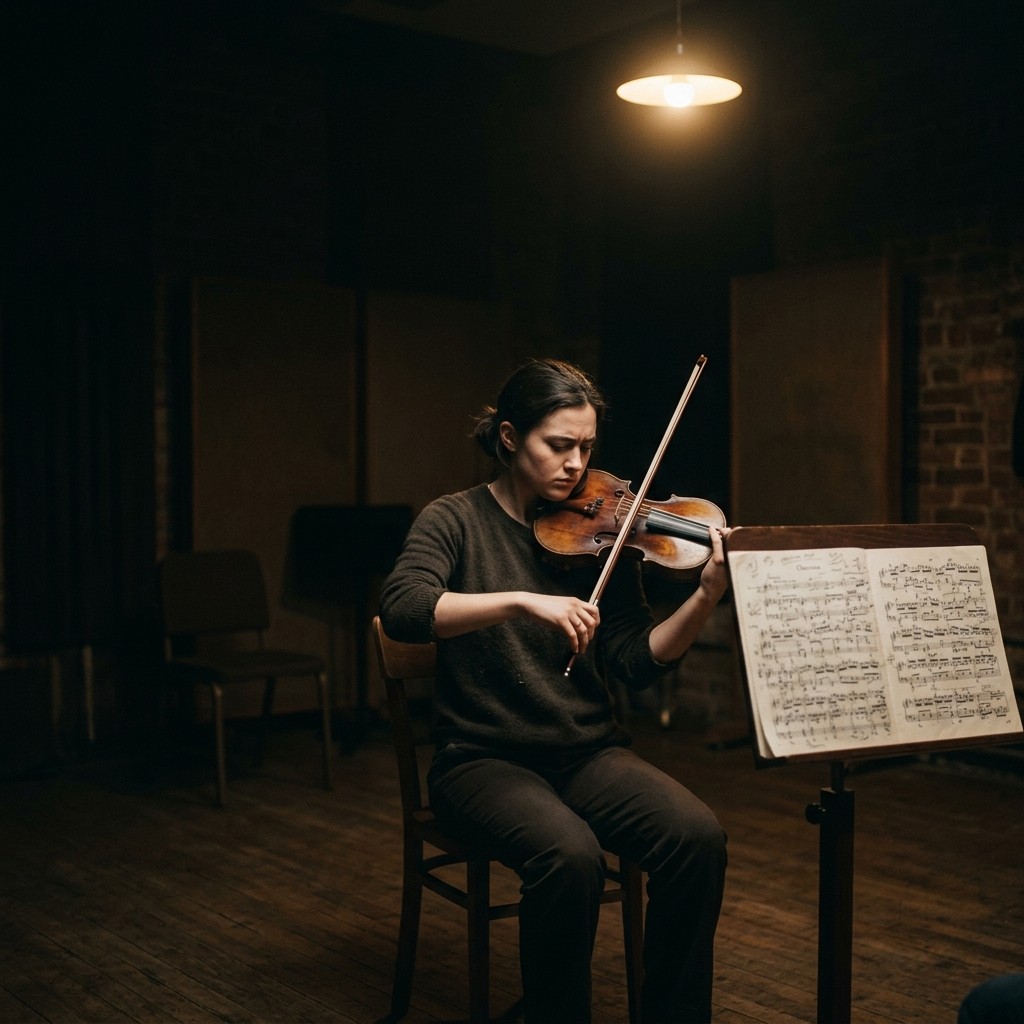
Learning accelerates when practice is designed rather than merely accumulated. Skill grows from working at the edge of your current ability, receiving immediate feedback, and retrieving what you know instead of reviewing it. Hours matter far less than what happens inside them — which is why time served is such a poor predictor of expertise.
Key takeaways
- Repetition alone produces plateaus. Improvement requires targeting the specific weakness rather than rehearsing what you can already do.
- The study methods that feel most productive — rereading, highlighting, reviewing notes — are among the least effective, because fluency is mistaken for knowledge.
- Retrieval beats review. The effort of pulling something out of memory is what makes it stay in.
- Mental rehearsal produces measurable skill gains, because imagining an action recruits much of the same machinery as performing it.
- Good decisions come from good process, not good outcomes. Under uncertainty, the process is the only part you control.
What separates practice that works?
Effective practice has four features: a specific target just beyond your current reach, full attention, immediate and honest feedback, and repetition focused on correcting error rather than repeating success. Remove any one of them and you get experience without improvement — the plateau that accumulates in every field.
The popular version of this research is that ten thousand hours makes an expert. The researcher whose work produced that number spent much of his career explaining that the hours were never the point; the structure of the practice was. What deliberate practice actually requires unpacks the distinction and what it means for anyone building a skill outside a formal coaching environment.
The uncomfortable implication is that good practice does not feel good. It involves working where you fail regularly, which most people avoid instinctively — it is far more pleasant to spend an hour on the parts you have already mastered.
Encoding: making it stay
Most of what we were taught about studying is backwards. Rereading builds familiarity, and familiarity feels like understanding right up to the moment you have to produce the knowledge from scratch. The methods that feel harder — testing yourself, spacing sessions out, mixing topics rather than blocking them — produce weaker performance during practice and substantially better retention afterwards.
This is the principle of desirable difficulty, and it explains why the enjoyable study session so often yields nothing a month later. How memory really works and the techniques that make learning stick covers active recall, spacing and elaboration in practical detail, including how to build a review schedule you will actually keep.
A useful companion here is what music does to the brain — a look at one of the few activities that engages an unusually wide range of neural systems at once, and at how to use it deliberately for focus and mood rather than as ambient noise.
Rehearsal and performance
Skill has to survive contact with pressure, and pressure is a separate skill.
The most portable tool is mental rehearsal. Visualisation and mental practice covers what elite performers across sport, surgery and music have long used: detailed, first-person, multi-sensory rehearsal of the action, including how to handle it when things go wrong. Imagery is not a substitute for physical practice, but as a supplement it produces real gains — and it is available when the gym, the instrument or the operating theatre is not.
The other half of performance is judgment. Most consequential outcomes turn on a small number of decisions made with incomplete information, where the quality of your process is the only thing you can influence. Decision-making under uncertainty walks through the biases that distort those moments and the frameworks — base rates, inversion, expected value, separating the reversible from the irreversible — that make you more reliable without making you slower.
Assembling a learning system
Choose one skill and define what better means concretely enough to measure. Find feedback, whether from a coach, a test, a recording or a metric, because practice without feedback is just repetition with confidence. Schedule the difficult part first, while attention is fresh, and keep sessions short enough to sustain full concentration rather than long enough to feel virtuous.
Then protect the conditions. Learning demands undivided attention, which is the domain of the focus and deep work hub — a fragmented hour produces very little encoding. And consolidation happens largely during rest and sleep, so the rest and wellbeing guides are not a break from the training but part of it. Practise hard, then let the brain finish the job while you sleep.