
If you imagine Kanyakumari beach as a soft crescent of white resort sand where you kick off flip-flops and wade gently into calm turquoise water, your first five minutes at Land's End will jolt you awake.
The main shore below Kumari Amman Temple and Gandhi Mandapam is not a gentle lagoon. It is a jagged shelf of dark gneiss boulders battered simultaneously by swells from the Arabian Sea, the Indian Ocean, and the Bay of Bengal—with multi-colored grains of red, yellow, and black monazite sand swirling in the foam and a fierce rip current pulling straight out toward the rocks.
That is why seasoned travellers say Kanyakumari has one beach for looking, and three completely different beaches for walking. Once you step fifteen minutes east or west of town, the souvenir stalls disappear and one of the most dramatically varied sixty-kilometre coastlines in India opens up in quiet wonder.
1. Triveni Sangam (Main Kanyakumari Beach): Sacred, Dramatic, Not for Swimming
Triveni Sangam—the ceremonial confluence where the three seas meet—is the beating heart of town. At dawn and dusk, pilgrims scoop cupped palms of ocean water toward the sun while photographers line the concrete steps looking toward Vivekananda Rock Memorial.
Look down at the shoreline pebbles in morning light and you notice why ancient poets celebrated Kanyakumari's sand: wind and tide sort heavy minerals into streaks of crimson garnet, pale quartz, and gleaming black ilmenite. Legend playfully calls them the spilled rice and lentils from Goddess Kanyakumari's interrupted wedding feast.
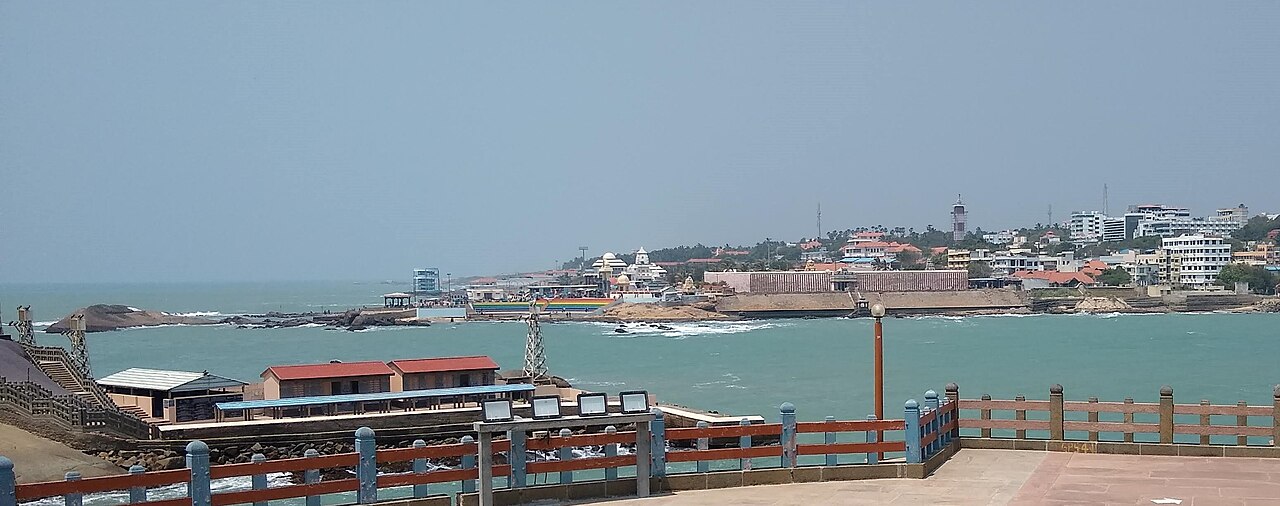 The meeting shore at Triveni Sangam in Kanyakumari. Photo: N. Vivekananthamoorthy, CC BY-SA 4.0, via Wikimedia Commons.
The Safety Truth You Must Know: Triveni Sangam is for standing on the ghats, not for swimming. Cross-currents where three bodies of water collide create sudden drop-offs and treacherous undertows. During rough-sea periods—such as the 10–15 ft wave surges that triggered formal sea-bathing bans in February 2025 and high-wave alerts in February 2026—guards keep visitors off the lower rocks entirely. Respect the flags, watch from the stepped ghats, and save your barefoot miles for the coast west of town.
2. Sothavilai Beach: Four Kilometres of Dunes and Silence
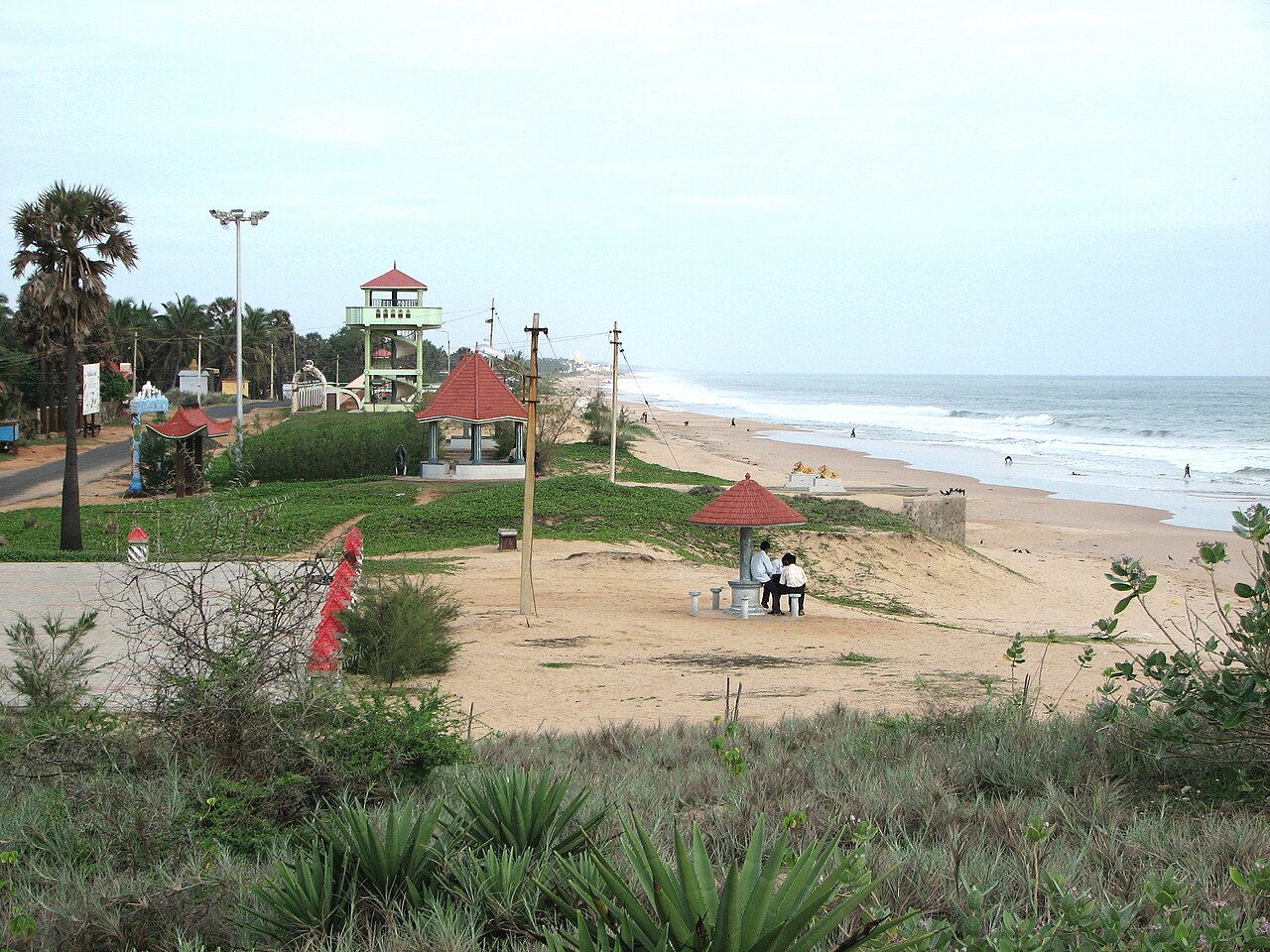
Drive just 12 kilometres west of Kanyakumari town past coconut groves and salt pans and the shoreline transforms completely.
Sothavilai Beach stretches for roughly four uninterrupted kilometres along the Arabian Sea, backed by soft wind-sculpted sand dunes and rows of whispering casuarina trees. Even on busy weekends when Kanyakumari's town promenade is shoulder-to-shoulder, you can walk half a mile along Sothavilai with nothing beside you except crab tracks, fishing nets drying in the breeze, and long rolling surf.
Rebuilt thoughtfully after the 2004 Indian Ocean tsunami with wide shaded viewing shelters, Sothavilai is one of the best places in the district simply to slow down your nervous system—the exact kind of blue-space walking shown in environmental psychology to lower cortisol and quiet mental rumination (explored further in The Nature Prescription).
- Swimming caution: Although Sothavilai looks wide and inviting, local notices and lifeguards still warn against deep-water bathing because of strong shelf currents. Treat it as a barefoot walking beach, bring water, and arrive around 4:30 PM for golden hour.
3. Vattakottai Beach: Black Mineral Sand Beside a Sea Fort
Seven kilometres north-east of town, tucked directly beneath the 18th-century granite ramparts of Vattakottai Fort, sits a short crescent of shore unlike anywhere else in Tamil Nadu.
Here the sand turns slate-charcoal—rich in natural heavy black minerals washed along the Coromandel bend. Standing on the fort's seaward bastion, you watch white foam break sharply against dark volcanic-looking grains on one side while emerald foothills of the Western Ghats rise inland on the other. Because few tour buses drive the seven kilometres out from town, late afternoons here feel wonderfully unhurried.
4. Muttom Beach and Lighthouse: Red Cliffs and Wooden Catamarans
Push 30 kilometres west along the coastal road and the flat sand gives way to drama.
Muttom is a working Christian-and-coastal fishing village perched above towering weathered boulders, rusted laterite cliffs, and fierce blue rollers. Standing sentinel on the headland is the Muttom Point Lighthouse, first established in the late 19th century to warn ships off the treacherous Crocodile Rock reef offshore (and generally open to afternoon visitors via the Directorate of Lighthouses and Lightships).
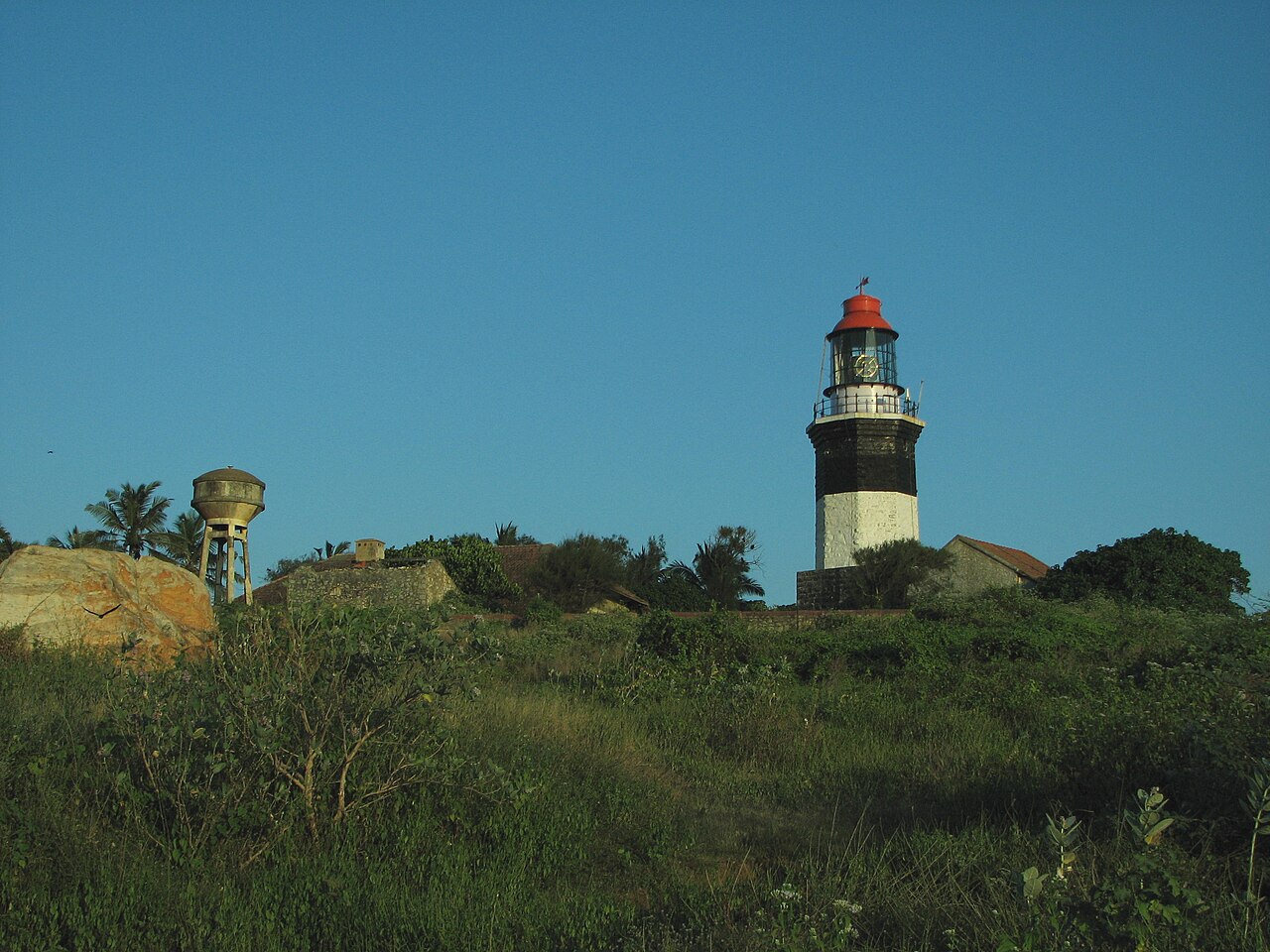 The 19th-century lighthouse overlooking the boulder-strewn cliffs of Muttom. Photo: Infocaster, CC BY-SA 3.0, via Wikimedia Commons.
Down in the cove below, wooden kattumarams (traditional lashed log rafts and fiberglass skiffs) haul in the afternoon catch while sea eagles circle the cliff updrafts. If you enjoy slow photography or simply watching real coastal life far removed from tourist trinket stalls, Muttom at 5:00 PM is pure magic.
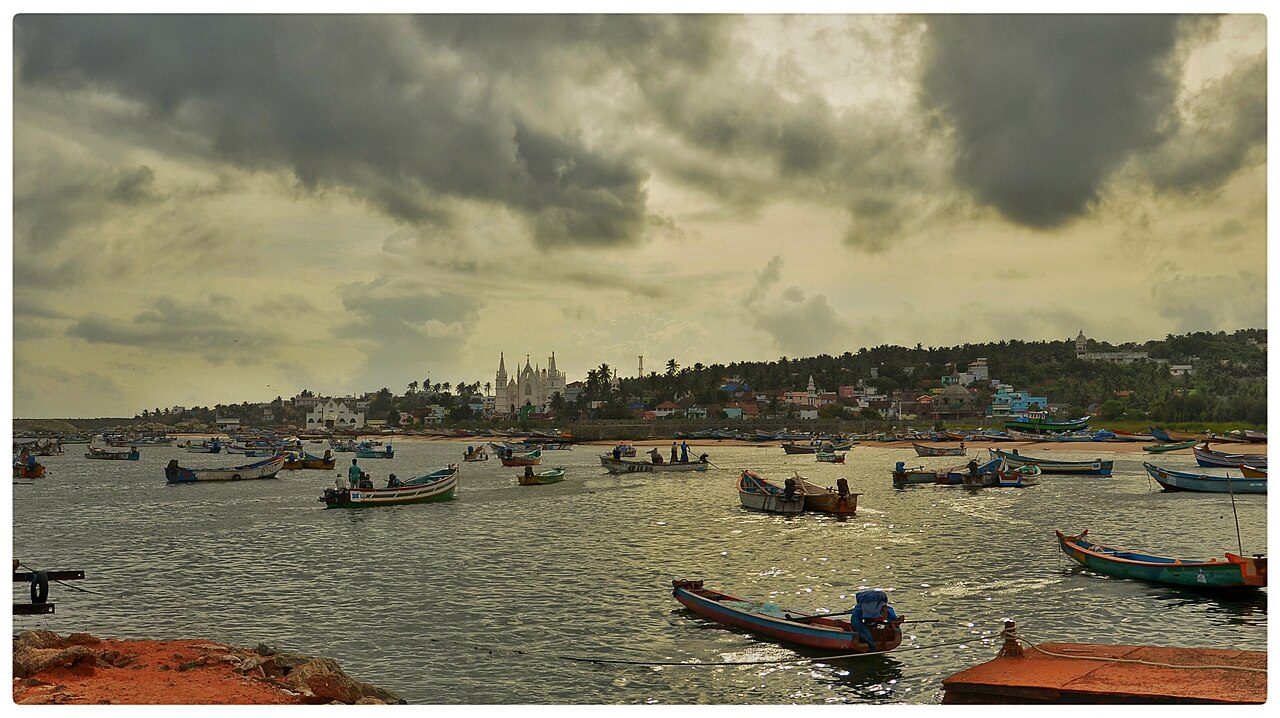 Evening stillness along the fishing boats at Muttom Cove. Photo: ACKSEN, CC BY-SA 4.0, via Wikimedia Commons.
Choosing Your Beach by Mood
- For sunrise ritual & monuments: Triveni Sangam / East Shore (05:45–06:30 AM)
- For a quiet, four-kilometre barefoot walk: Sothavilai Beach (late afternoon)
- For black sand & heritage views: Vattakottai Fort Beach (04:00–05:30 PM)
- For dramatic cliffs, lighthouse views & fishing life: Muttom Beach (04:30–06:15 PM)
For a deeper look at how the nearby Manakudy mangroves and Thengapattanam estuary complete this coastal ecosystem—plus season-by-season swell warnings—explore our Water, Wind and Shore nature trail, or pair your coast afternoon with dinner from The Nanjil Nadu Table.