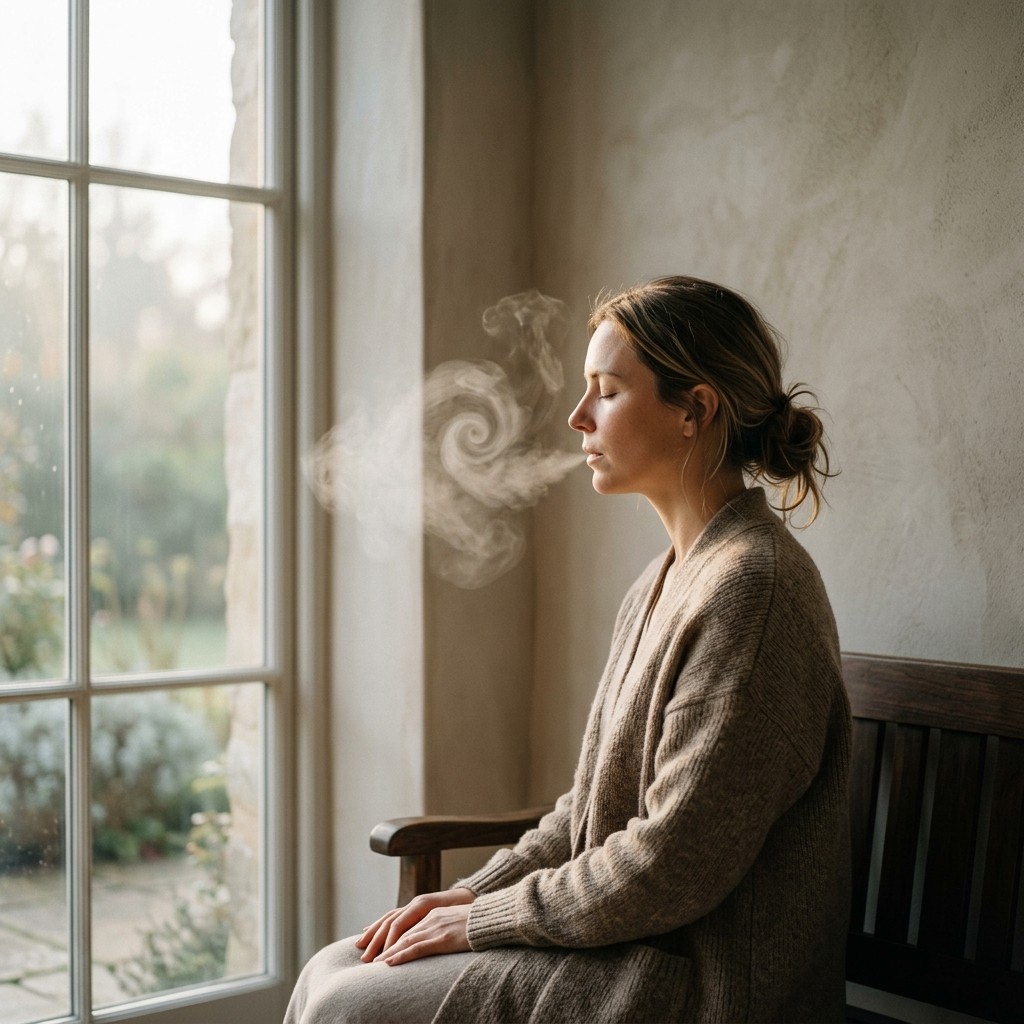
Anxiety is a threat-detection system firing in situations that are uncomfortable rather than dangerous, and it is maintained by avoidance. Fear shrinks when you approach what you have been avoiding in graded, tolerable steps and stay long enough for your body to learn that the predicted catastrophe does not arrive.
Key takeaways
- Avoidance is the fuel. Every time you escape a feared situation, relief rewards the escape and the fear gets slightly stronger.
- Exposure works through learning, not endurance. The goal is to gather evidence that contradicts the prediction, not to prove how much you can withstand.
- Panic is often fear of your own bodily sensations rather than of the external situation — which is why treating the body's alarm directly is so effective.
- Breathing is the one autonomic function under voluntary control, making it the fastest available lever on your nervous system state.
- Naming a fear in specific detail reduces its power, because vague dread is far harder to act against than a defined risk with a defined response.
The loop that keeps anxiety alive
Anxiety survives on a simple, self-reinforcing cycle. A situation triggers a prediction of disaster. The prediction produces physical alarm. The alarm feels intolerable, so you leave — or never go. Relief follows immediately, and your brain records a lesson: escaping worked, the danger was real, do that again.
Nothing in that loop is irrational. It is a learning system doing exactly what learning systems do, applied to a threat that is not actually a threat. Which means the exit is not to argue yourself out of the fear but to interrupt the loop by staying, at a dose you can tolerate, until the prediction fails.
That is the whole logic of systematic desensitization and graded exposure: break the fear into a ladder of steps, start at a rung that is uncomfortable but manageable, and remain there until the intensity drops on its own. The drop is the learning. Leaving early prevents it.
What if the thing you fear is your own body?
Panic frequently has nothing to do with the room you are in. The trigger is internal — a racing heart, tightness in the chest, air hunger, a wave of dizziness — and the catastrophic interpretation of those sensations produces more of them. The loop closes inside your own physiology, which is why avoiding places never fully resolves it.
The clinical answer is counterintuitive and effective: deliberately produce the sensations you fear, in a safe context, until they stop meaning danger. Interoceptive exposure for panic explains how this is done and why it targets the actual mechanism rather than its surface. If your anxiety centres on bodily sensations, this is the most direct route available.
Naming the fear before you face it
Undefined fear is the most paralysing kind, because a mind with no specifics generates unlimited ones. Writing down precisely what you are afraid of — what could go wrong, how you would prevent it, how you would repair it if it happened — converts a fog into a list. Lists can be acted on. Fog cannot.
The fear-setting exercise is the structured version of this, descended from the Stoic practice of rehearsing adversity in advance. It also asks the question most people never ask: what is the cost of not acting, compounded over a year or a decade? That figure is usually larger than the risk being avoided, and it is invisible until you write it down.
Calming the system so you can do the work
Exposure is the treatment; regulation is what makes the treatment tolerable. Three skills carry most of the weight.
Breathing comes first. Slow exhalations that last longer than the inhalation shift you toward the parasympathetic side, and the effect arrives within a minute or two. The science of breathwork covers the patterns worth knowing and when each one is appropriate — including why over-breathing produces many of the sensations people find most alarming.
Body awareness comes second. Anxiety is stored and expressed physically, and most anxious people are disconnected from that layer. Somatic awareness practices teach you to read tension, breath and posture as data, and to release rather than override them.
Attention comes third. Mindfulness made simple is the training that lets you observe an anxious thought as a passing mental event instead of an emergency briefing. Note that mindfulness is a companion to exposure, not a substitute — used as a way to avoid feeling the fear, it becomes another form of escape.
For the wider framing — why voluntary, recoverable stress makes you more capable over time — the mindset and resilience hub covers the same territory from the perspective of building capacity rather than reducing symptoms. If anxiety is severe, persistent or accompanied by hopelessness, working with a qualified clinician is the right first step; these guides are a supplement to care, not a replacement for it.