
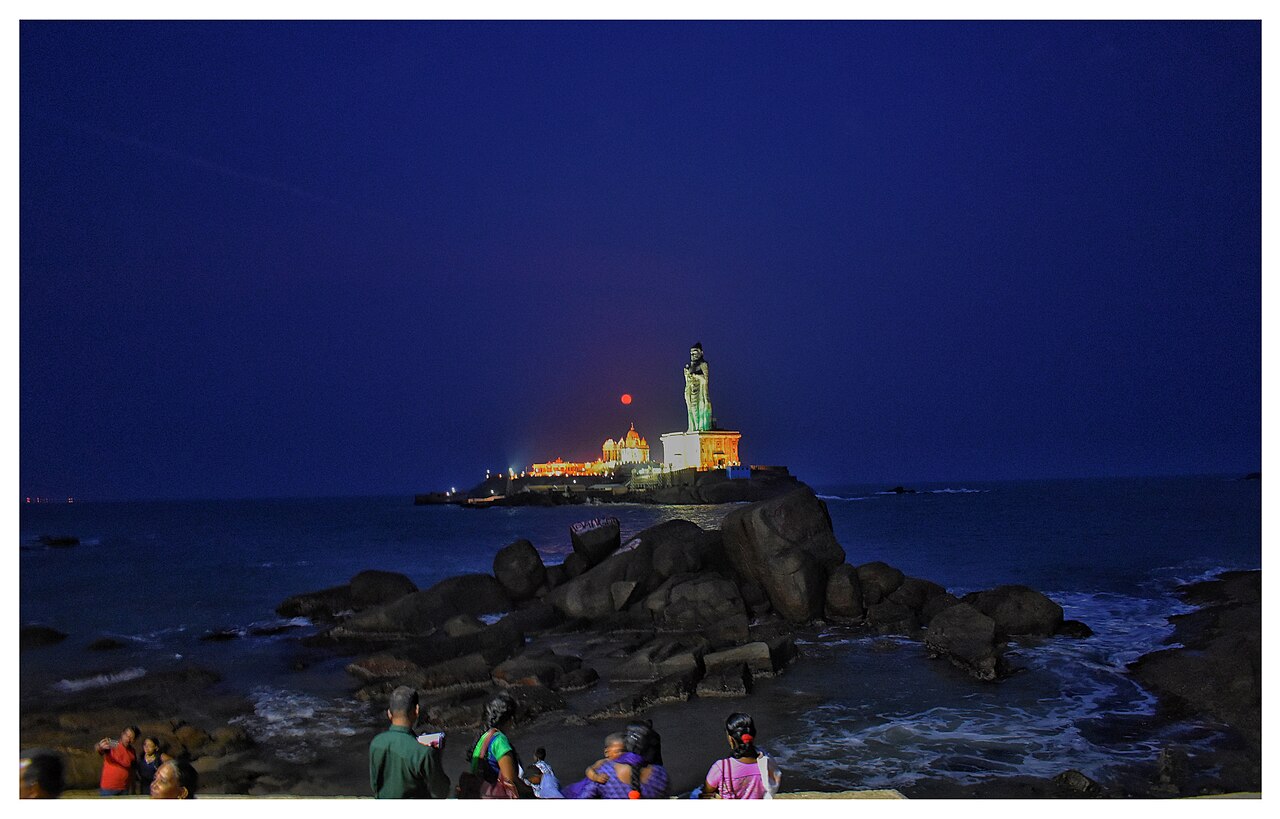
Wait long enough on the sea wall at Kanyakumari and you notice something strange about the clouds.
Half the year, rain blows out of the Arabian Sea, slams against the steep green spine of the Western Ghats thirty kilometres inland, and dumps over two thousand millimetres of water onto western valleys like Thengapattanam and Pechiparai while Kanyakumari town stays oddly dry and wind-whipped. Three months later, the wind reverses direction—sweeping off the Bay of Bengal to refill the eastern wetland tanks and turn coastal skies pewter grey at dawn.
Because Kanyakumari sits right at the funnel where India tapers into a granite V, two different monsoons rule two different sides of the same small district.
That geography explains why search interest for best time to visit kanyakumari spikes twice every year—once in October just before winter travel opens, and again in May right before the rains arrive. Choosing the right month does not just change the temperature; it decides whether the Poompuhar ferry crosses to Vivekananda Rock Memorial, whether Thirparappu Falls roars or trickles, and whether you actually see the horizon at sunrise.
October to March: The Golden Window (With One Weather Caveat)
Ask any local driver or hotelier when Kanyakumari feels most effortless, and they point straight to October through March—especially late November through February.
Morning air drops into a comfortable 23°C to 26°C range before sunrise, climbing gently toward 30°C–32°C by afternoon. The punishing humidity of late spring eases. On the Suchindram-Theroor wetlands north of town, winter migratory birds—painted storks, spot-billed pelicans, pintails, and sandpipers—arrive from November onward, peaking around January.
The October–December North-East Monsoon Caveat: While December is indisputably the peak travel month in search volume and hotel bookings, October through mid-December belongs to Tamil Nadu's north-east monsoon. Unlike torrential July downpours on the Kerala coast, this season usually arrives as passing squalls and dramatic cloud banks—meaning some mornings offer crisp pink sunrises while others swallow the eastern horizon in purple mist. Bring patience (and at least two mornings in town) if you visit before mid-December.
January to March offers the clearest skies of the entire year: dry air, sparkling visibility across the 77-metre glass bridge, and calm mornings for walking the ramparts of Vattakottai Fort.
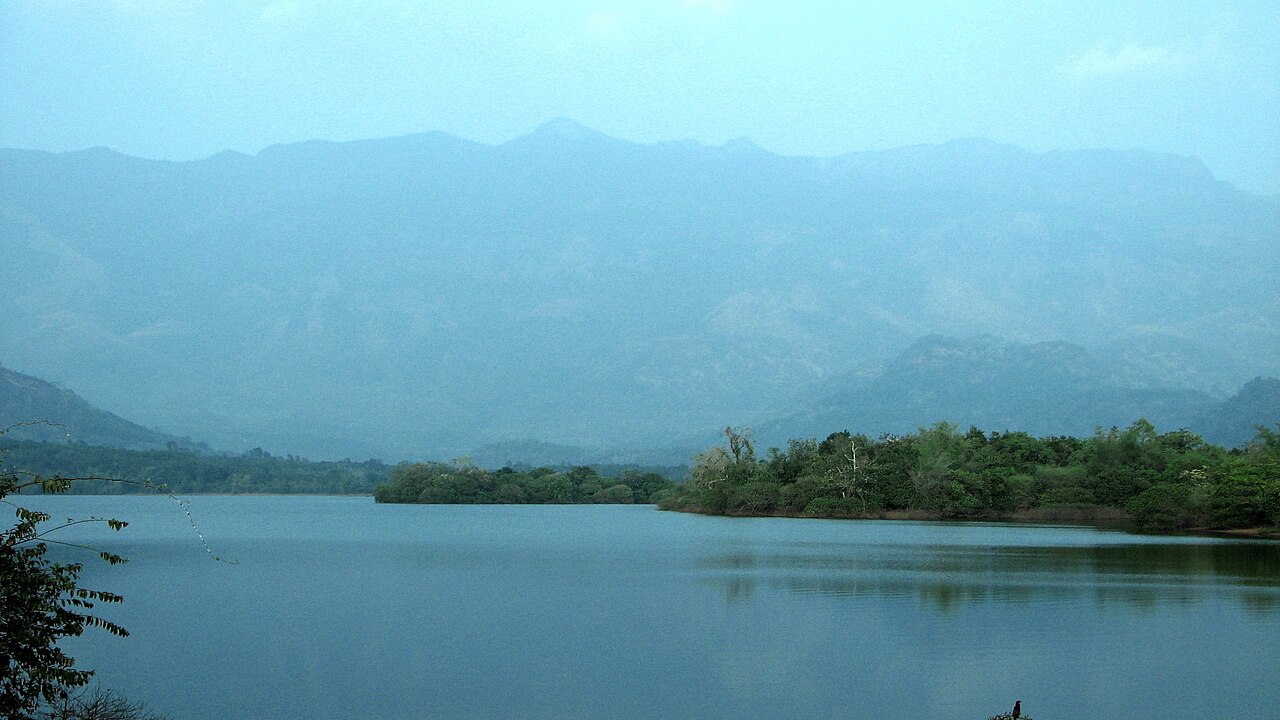 Pechiparai Dam beneath the green slopes of the Western Ghats—fed heavily by the June-to-September south-west monsoon. Photo: Infocaster, CC BY-SA 3.0, via Wikimedia Commons.
April and May: Heat, Mangoes, and the Night of Twin Lights
By April, the southern sun climbs high and midday temperatures reach 33°C to 36°C with heavy coastal humidity. Walking unshaded across the Mathur Aqueduct or climbing Chitharal Jain Hill at noon becomes punishing.
Yet Google Trends shows a distinct secondary surge in searches every May. Why do travellers brave the heat?
Two reasons. First, Indian school summer holidays drive multi-generational family trips south, especially when paired with cooler evenings along the Western Ghats or Kovalam cliffs. Second—and far more magical—is Chitra Pournami.
The Rare Astronomy of Chitra Pournami
On the full-moon evening of the Tamil month of Chithirai (typically falling in late April or early May—for example, around 1 May in 2026 near 18:00), Kanyakumari stages an optical phenomenon possible only at an unobstructed sea-facing southern cape.
Stand facing due south along Triveni Sangam, Sunset Point, or Murugan Kunram just before 6:00 PM. Turn your head right (west): the swollen amber disc of the sun drops directly into the Arabian Sea. Turn your head left (east) at that exact same minute: the huge silvery full moon rises vertically out of the Bay of Bengal—two opposing celestial lamps balanced on a single horizon of water.
Thousands gather on the ghats and hotel roofs to watch it happen in silence. If you plan your trip around Chitra Pournami, reserve a sea-facing room months ahead (see our Kanyakumari hotels guide) so you can watch from a balcony rather than a packed promenade.
June to September: Wild Seas, Green Valleys, and Empty Palaces
Google Trends reveals a surprising third bump in kanyakumari tourism searches every July and August—and it belongs to travellers who prefer roaring waterfalls and empty heritage corridors over beach sunbathing.
During the south-west monsoon (June to September), rain sweeps across the Ghats on the western border of the district:
- What blooms: Thirparappu Falls pours across its full 300-foot rock shelf in thick white sheets; Pechiparai and Perunchani dams fill to capacity; paddy fields and rubber estates around Thuckalay turn emerald neon. Padmanabhapuram Palace's dark teak verandas feel intoxicatingly cool while rain drums on Mangalore tiles outside.
- What gets rough: The sea at Kanyakumari turns wild and unpredictable. Even outside monsoon peak, high swells routinely halt ocean activities—for instance, sea bathing was formally restricted during 10–15 ft wave surges in February 2025, and rough-sea alerts triggered in February 2026. Between June and August, expect intermittent Poompuhar ferry cancellations whenever cross-winds spike.
If you visit between July and September, build your itinerary around heritage and Ghats nature first (The Stone and the Teak and Water, Wind and Shore) and treat the ferry crossing as a weather-permitting bonus.
Month-by-Month Decision Table
| Season | Skies & Sea | Crowds & Rates | Best For |
|---|---|---|---|
| Mid-Dec – Feb | Crisp mornings (23–30°C), clearest horizons, active bird wetlands | Peak crowds & hotel rates | First-timers, photography, Vivekananda Rock, birding |
| Mar – May | Hot days (32–36°C), calm mornings, dramatic Chitra Pournami dusk | Busy May school holidays | Dawn/dusk purists, Chitra Pournami full moon |
| Jun – Sep | Western Ghats rain, rough surf, occasional ferry halts | Quietest town hotels | Waterfalls, Padmanabhapuram Palace, Muppandal wind plains |
| Oct – Early Dec | North-east showers, green tanks, moody sunsets | Moderate before Dec 15 | Budget/peaceful travel, bird arrivals, lush temples |
Three Golden Rules Before Locking Your Dates
- Avoid Monday for palaces: Both Padmanabhapuram Palace (Thuckalay) and Kuthiramalika Palace (Thiruvananthapuram) are closed every Monday. Always schedule your arrival so Tuesday or Wednesday covers your royal trail.
- Avoid Nov 24 – Dec 3 in Kottar if you dislike gridlock: St. Francis Xavier Cathedral's famous ten-day festival (especially the Dec 1–3 car procession) fills Nagercoil's approach roads.
- Never cut the ferry too tight: Always allow at least two mornings in town so a single windy morning never costs you the crossing to Vivekananda Rock and the glass bridge.
For a deeper look at how coastal seasons interact with bird migrations, dams, and wind plains, explore our Water, Wind and Shore nature trail, or plan your full arrival by rail or airport in Chennai to Kanyakumari: The Road and Rail Odyssey.